
One cozy evening, as the temperatures started to dip, I found myself yearning for the comforting embrace of a warm, savory dish. That’s when I decided to whip up a Classic Sukiyaki—a treasured jewel of Japanese cuisine that never fails to warm both the heart and the soul. Imagine the rich aroma of thinly sliced beef mingling with fresh vegetables and fragrant shiitake mushrooms, all swimming in a delectable soy sauce-based broth. What makes this meal truly special is not only the harmonious blend of flavors but also its incredible versatility; you can customize it to suit any diet or preference. Plus, it comes together in just 20 minutes, making it the perfect solution for a busy weeknight dinner. Join me on this culinary adventure and discover how easy it is to create a delightful Sukiyaki right in your own kitchen.
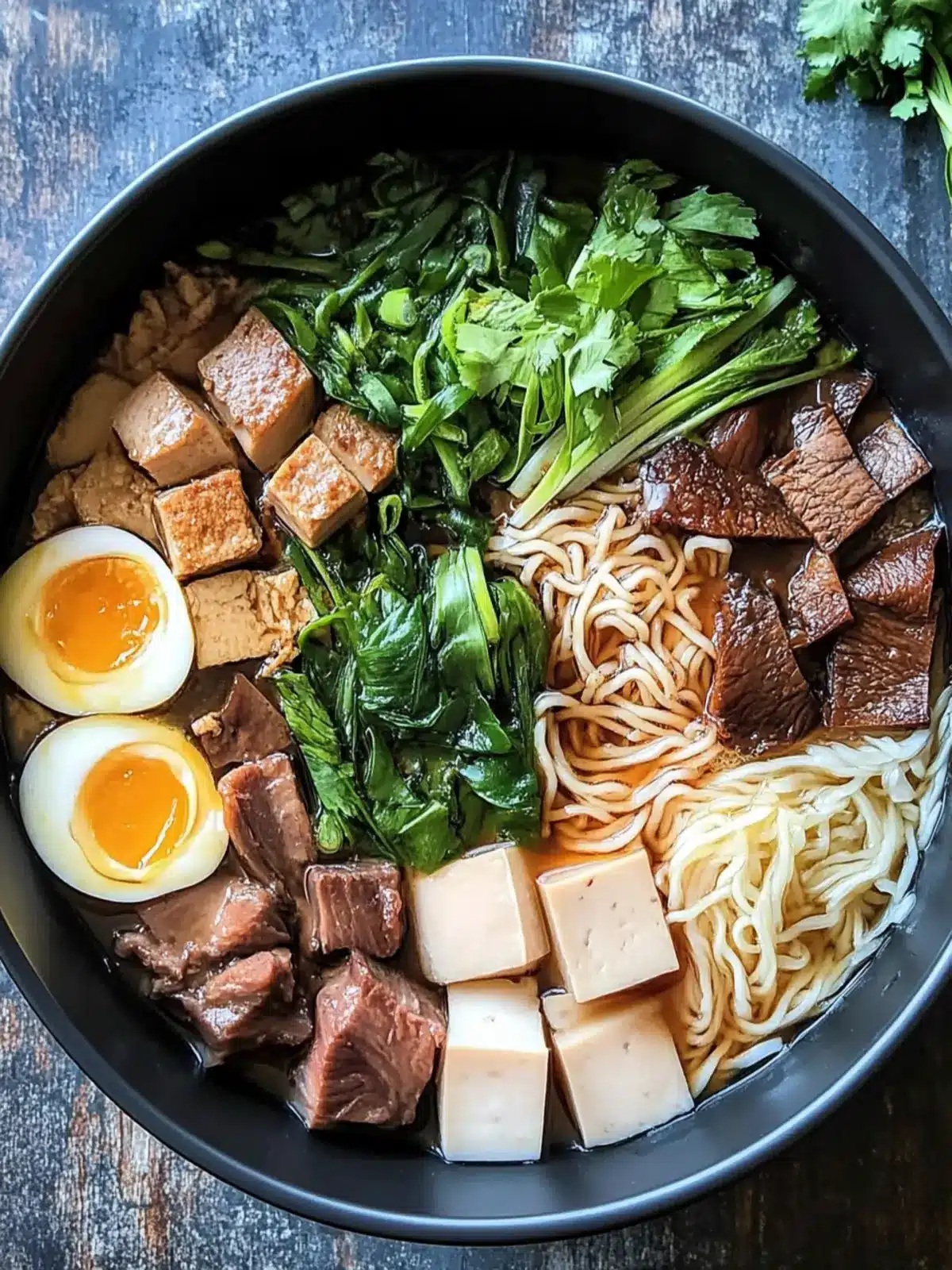
Why is Sukiyaki the ultimate comfort food?
Quick Preparation: Whip up this dish in just 20 minutes, perfect for a busy weeknight.
Flavor Explosion: A delightful mix of savory and sweet, with tender beef and fresh vegetables.
Versatile Ingredients: Feel free to swap ingredients based on your dietary needs, such as using tofu for a vegetarian twist.
Family-Friendly: It’s a hit at the dinner table, making everyone feel included and cherished.
Cultural Tradition: Enjoy a piece of Japanese heritage and create lasting memories with a communal dining experience. Give it a go and serve it with steamed rice or a light salad for a balanced meal!
Sukiyaki Ingredients
• To create this delightful Sukiyaki, gather all the essential elements for a warm, comforting dish that will bring joy to your dinner table!
For the Base
- Sukiyaki Beef (1.5 lbs) – Tender, thinly sliced beef for a melt-in-your-mouth experience. Substitute with chicken or pork for variations.
- Konjac Noodles (7 oz) – Adds texture and substance; low-calorie and absorbs flavors well. Substitute with udon or rice noodles.
- Tofu (firm or yaki-tofu) – Provides protein and balances the savory soup. Substitute with tempeh for a firmer texture.
For the Vegetables
- Green Onions – Adds a mild onion flavor; long and thick Japanese negi is preferred. Substitute with regular green onions.
- Shungiku (chrysanthemum leaves) – Provides a unique flavor and aroma; can be replaced with spinach or other leafy greens.
- Shiitake Mushrooms – Earthy flavor; can be replaced with button mushrooms if unavailable.
For the Sauce
- Soy Sauce (1/3 cup) – Base flavor of the sauce, bringing depth and richness.
- Mirin (1/3 cup) – Sweet rice wine that enhances the sauce’s flavor.
- Sugar (2 tbsp) – Balances savory flavors for a perfect finish.
- Water (1/3 cup) – Dilutes sauce to desired consistency.
For Cooking
- Cooking Oil – For sautéing; any neutral oil works well.
With these ingredients, you’ll be well on your way to crafting a delightful bowl of Sukiyaki that your family will surely cherish!
How to Make Sukiyaki
-
Prepare the Sauce: In a bowl, mix together the soy sauce, mirin, sugar, and water until the sugar dissolves. Set it aside, as this delicious base will elevate your dish!
-
Chop Ingredients: Cut the green onions into 2-inch pieces, remove the stems from the shiitake mushrooms, cube the tofu, chop the shungiku, and halve the konjac noodles to ensure uniform cooking.
-
Heat the Pan: Warm a skillet over medium heat and add a splash of cooking oil. Let it get hot, and then lightly char the green onions, adding flavor and a touch of sweetness.
-
Sear the Beef: Add the thinly sliced beef to the pan, searing it on both sides until it’s slightly browned—this should only take about 2-3 minutes!
-
Add the Sauce: Pour the prepared sauce over the beef, allowing it to cook until the beef is tender and fully cooked through, about 3-5 more minutes.
-
Incorporate Noodles and Veggies: Add the shiitake mushrooms, tofu, and konjac noodles to the skillet. Cover the pan and cook for about 3-4 minutes until the noodles start to soften.
-
Stir in Greens: Finally, add the shungiku and stir gently, cooking for an additional minute until the greens wilt beautifully.
-
Serve with Egg: Enjoy this goodness warm, accompanied by a side of raw beaten egg for dipping if desired—it adds a creamy richness that enhances every bite.
Optional: Garnish with sesame seeds for an extra touch of flavor.
Exact quantities are listed in the recipe card below.
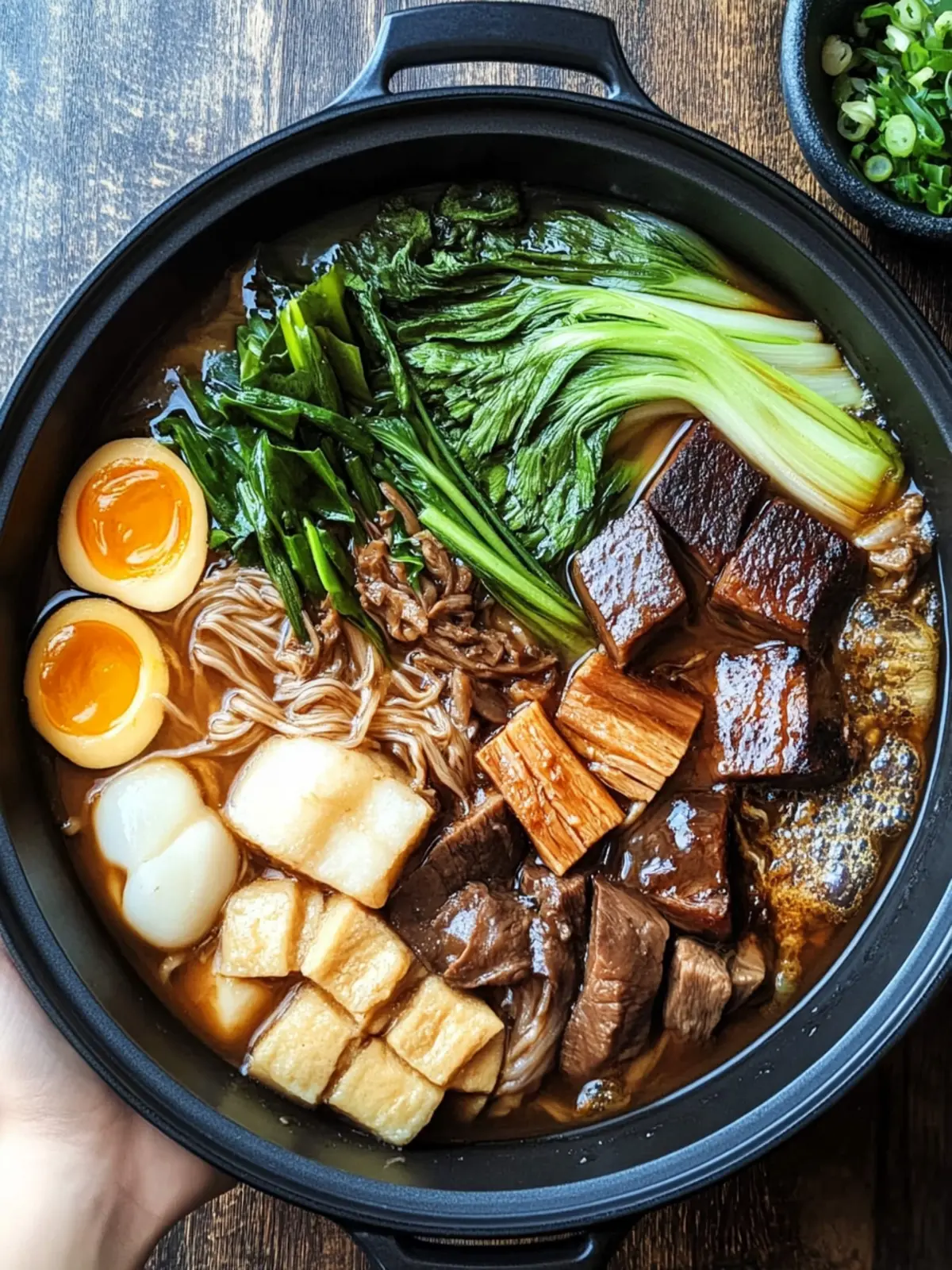
Sukiyaki Variations & Substitutions
Feel free to explore and make this Classic Sukiyaki your own with these delicious twists and substitutions!
- Vegetarian: Omit the beef entirely and add additional tofu and a variety of colorful vegetables for heartiness.
- Gluten-Free: Use tamari instead of soy sauce and ensure your noodles are gluten-free.
- Sweetness Boost: Replace sugar with honey or maple syrup for a natural sweetness that enhances the flavor.
- Seasonal Greens: Substitute shungiku with seasonal leafy greens like kale or bok choy for different textures and flavors.
- Umami Twist: Add a splash of mirin or shiitake mushroom powder to deepen the umami notes in your broth.
- Heat Level: For a spicy kick, include sliced fresh chili peppers or a drizzle of sriracha in your sauce.
- Texture Variation: Use rice instead of konjac noodles for a hearty, traditional approach that will crunch delightfully in every bite.
- Smoky Flavor: Incorporate smoked tofu or add a dash of liquid smoke for a surprising, rich depth to your dish.
Get creative and let your taste buds lead the way!
How to Store and Freeze Sukiyaki
Fridge: Store leftover Sukiyaki in an airtight container in the fridge for up to 2 days. Make sure to let it cool before sealing to preserve freshness.
Freezer: If you’d like to keep Sukiyaki longer, freeze it in portions for up to 3 months. Use freezer-safe containers or bags to prevent freezer burn.
Reheating: When ready to enjoy, thaw overnight in the fridge, then reheat gently on the stove over low heat. Avoid boiling to keep the ingredients tender.
What to Serve with Classic Sukiyaki?
Enhance the warmth of your dining experience with these delightful pairings that perfectly complement your Sukiyaki.
-
Steamed White Rice: A classic accompaniment, it soaks up the sauce’s flavors beautifully, creating a comforting balance to every bite.
-
Japanese Pickles: These tangy bites add a refreshing crunch to your meal, balancing the savory richness of Sukiyaki with their vibrant flavors.
-
Soba Noodle Salad: Light and nutty, this chilled salad provides a delightful contrast in texture, while incorporating fresh vegetables enhances your overall meal experience.
-
Miso Soup: A warm, umami-rich soup warms your soul. Sipping this between bites of Sukiyaki is pure culinary bliss—a tradition to savor!
For dessert, consider a light Mochi Ice Cream. Its chewy texture and sweet flavor make for a refreshing end to your savory feast, leaving everyone with a smile.
Pair these options with a chilled Green Tea or crisp Sake to elevate your dining experience even further!
Make Ahead Options
These Classic Sukiyaki components are perfect for those looking to meal prep and enjoy delicious Japanese cuisine throughout the week! You can prepare the sukiyaki sauce up to 3 days in advance by mixing the soy sauce, mirin, sugar, and water, then storing it in the fridge to maintain its rich flavor. Additionally, chop the vegetables—like green onions, shiitake mushrooms, and shungiku—up to 24 hours before cooking to save time. When you’re ready to finish the dish, simply sear the beef, add your prepped ingredients, and pour on the sauce. This method ensures your Sukiyaki will be just as delightful and fresh as if prepared that day!
Expert Tips for Sukiyaki
-
Slice Thinly: Use a sharp knife to cut the beef as thinly as possible for quick cooking and tender texture.
-
Avoid Overcrowding: Cook in batches if your pan is small; overcrowding can lead to steaming instead of searing, affecting flavor.
-
Season to Taste: Feel free to adjust the soy sauce and sugar levels in the sauce to suit your flavor preference while keeping the essence of Sukiyaki intact.
-
Serve Communally: For an authentic experience, prepare Sukiyaki in a hot pot and allow everyone to serve themselves—it’s perfect for gatherings!
-
Try Different Noodles: Swap konjac noodles with udon or rice noodles based on your dietary needs for a delightful twist!
Sukiyaki Recipe FAQs
What type of beef is best for Sukiyaki?
Absolutely! For Sukiyaki, using tender cuts such as ribeye or sirloin, sliced thinly, gives that melt-in-your-mouth experience. Look for marbled meat for extra flavor. If you’re looking for alternatives, chicken or pork also work beautifully in this dish!
How should I store leftover Sukiyaki?
Very! To keep your leftover Sukiyaki fresh, store it in an airtight container in the refrigerator for up to 2 days. Let the dish cool before sealing, and when you’re ready to enjoy it, simply reheat it gently on the stove to avoid overcooking the ingredients.
Can I freeze Sukiyaki, and how?
Absolutely! If you’d like to freeze your Sukiyaki, portion it into freezer-safe containers or bags, removing as much air as possible. This way, it will stay fresh for up to 3 months. When you’re ready to enjoy, thaw it in the fridge overnight and reheat on low heat to maintain the tenderness of the beef and vegetables.
What should I do if my sauce is too salty?
If you find your Sukiyaki sauce a bit too salty, don’t worry! You can balance it out by adding a splash more water or mirin to dilute the flavors. Another great trick is to incorporate a bit of sugar to enhance the sweetness, which can help counteract the saltiness.
Are there any dietary considerations for Sukiyaki?
Very! Sukiyaki can easily be customized for dietary preferences. For a vegetarian version, simply omit the beef and load up on tofu and a variety of vegetables instead. If you’re wary of allergens, check the labels on sauces, especially soy sauce and mirin, as they can sometimes contain gluten or other allergens. Always feel free to substitute ingredients to suit your dietary needs!
How can I make sure my veggies stay crisp in the Sukiyaki?
Great question! To keep your vegetables, like shungiku and shiitake mushrooms, crisp and vibrant, be sure not to overcrowd the pan while cooking. Cooking in small batches allows them to sauté evenly and maintain their texture. Adding the greens towards the end of cooking also helps preserve their fresh, crunchy quality!
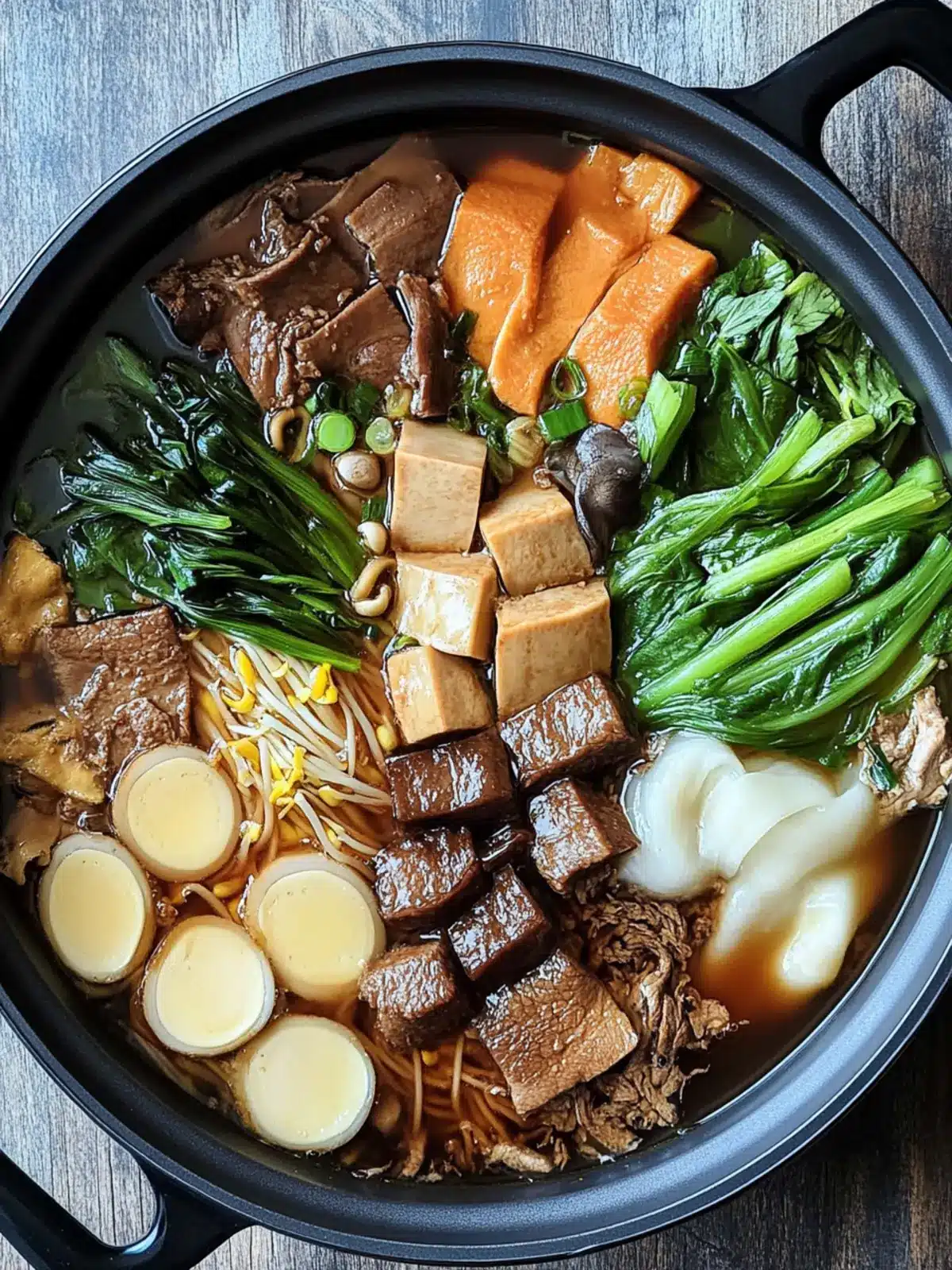
Sukiyaki Bliss: A Quick Taste of Traditional Japanese Comfort
Ingredients
Equipment
Method
- In a bowl, mix together the soy sauce, mirin, sugar, and water until the sugar dissolves.
- Cut the green onions into 2-inch pieces, remove the stems from the shiitake mushrooms, cube the tofu, chop the shungiku, and halve the konjac noodles.
- Warm a skillet over medium heat and add a splash of cooking oil.
- Add the thinly sliced beef to the pan, searing it on both sides until slightly browned.
- Pour the prepared sauce over the beef, allowing it to cook until the beef is tender.
- Add the shiitake mushrooms, tofu, and konjac noodles to the skillet.
- Finally, add the shungiku and stir gently, cooking until the greens wilt beautifully.
- Enjoy warm, accompanied by a side of raw beaten egg for dipping.