
There’s a special moment that happens in my kitchen when I prepare Warak Enab, the beloved Lebanese stuffed grape leaves. The scent of simmering herbs mingles with the savory notes of beef and spices, transporting me right to the heart of a bustling Lebanese kitchen. It’s one of those dishes that feels both elegant and comforting, effortlessly bringing family and friends together around the dining table.
Whether you’re searching for a delectable weeknight meal or a standout dish for your next gathering, these tender grape leaves wrapped around a rich filling are sure to impress. You won’t believe how simple they are to make—perfect for those who want to escape the fast-food routine and embrace the wholesome joys of homemade cuisine. Plus, with options for both beef and lamb, or even a tasty vegetarian twist, Warak Enab caters to every palate. Let’s dive into this culinary adventure, and soon, you’ll be savoring the succulent flavors of Lebanon right at home!

Why is Warak Enab a must-try dish?
Heartwarming Flavors: This dish captures the essence of Lebanese cooking, filling your kitchen with irresistible aromas.
Versatility Galore: Easily swap beef for lamb or enjoy a vegetarian variation, tailored to your preferences.
Simple Technique: The assembly process is straightforward, making this dish accessible even for novice cooks.
Crowd-Pleasing Appeal: Serve it at gatherings, and watch your friends and family savor every bite together.
Healthy Twist: This gluten-free and dairy-free recipe combines wholesome ingredients that are both nutritious and satisfying.
Enhance your culinary skills with other delicious Mediterranean recipes to discover more tasty options that will wow your guests!
Warak Enab Ingredients
For the Filling
• Ground Beef or Lamb – Provides hearty protein, and feel free to substitute with the other for varied flavors.
• Rice – Acts as a binder for the filling, but you can swap with quinoa for a gluten-free option.
• Baharat Spice Blend – Adds warmth and depth; if you can’t find it, try a mix of cumin, paprika, and coriander instead.
• Olive Oil – Essential for moisture and traditional flavor; don’t skip it!
• Lemon Juice/Zest – Brightens the dish and balances richness; using fresh lemon makes a notable difference.
• Salt & Pepper – Adjust according to your taste and the saltiness of the grape leaves.
For the Grape Leaves
• Grape Leaves – The star of the dish! Use fresh or jarred; remember to blanch jarred ones to avoid bitterness.
Experience the love and richness of Warak Enab with these carefully selected ingredients.
How to Make Warak Enab
-
Prepare Grape Leaves: Blanch jarred grape leaves in boiling water for a few minutes to reduce the briny flavor. If using fresh ones, rinse them thoroughly. Set aside to cool.
-
Make Filling: In a large bowl, mix ground beef or lamb with rice, baharat spice blend, olive oil, lemon juice, salt, and pepper. Ensure everything is well combined for a flavorful filling.
-
Assemble Grape Leaves:
- Lay Out the Leaf: Place a grape leaf on a clean surface, veiny side up.
- Add Filling: Spoon about one tablespoon of the filling at the base of the leaf.
- Roll Tightly: Fold up the bottom over the filling, fold in the sides, and roll tightly but gently to avoid any bursting.
-
Build Pot: Layer the bottom of your pot with a few tenderloin chops (optional for added flavor). Place the rolled grape leaves snugly in the pot, arranging them in layers if necessary.
-
Simmer: Pour in enough water or broth to cover the rolls halfway. Simmer on low heat for about 1.5 to 2 hours until the rice is fluffy and the meat is tender.
Optional: Serve warm with a side of yogurt sauce for a refreshing contrast.
Exact quantities are listed in the recipe card below.
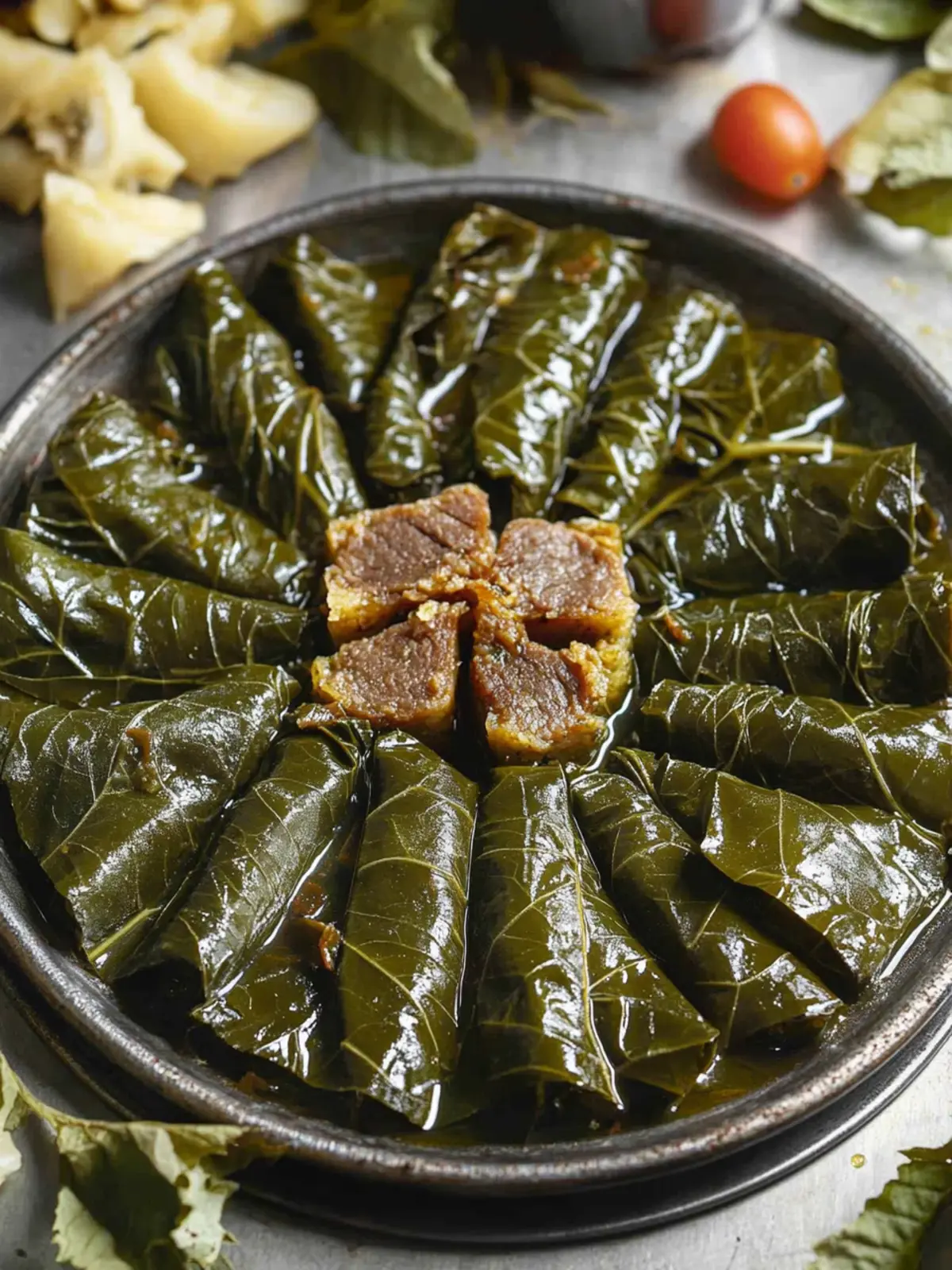
Make Ahead Options
These Warak Enab (Lebanese stuffed grape leaves) are perfect for busy home cooks looking to save time during the week! You can prepare the filling (ground beef or lamb, rice, and spices) up to 24 hours in advance; just store it in an airtight container in the refrigerator. Additionally, the grape leaves can be blanched and ready a day ahead, ensuring they’re cool and manageable when you start rolling. On the day you plan to serve, simply assemble the rolls and simmer as directed. By prepping these components ahead of time, you’ll have a delightful meal ready with minimal effort—just as delicious and comforting as if you made it all in one go!
Warak Enab Variations
Feel free to put your unique spin on these delicious stuffed grape leaves and discover new flavors that excite your palate!
- Lamb Swap: Substitute the ground beef for lamb for a richer, more savory filling that embodies traditional Lebanese flavors.
- Vegetarian Delight: For a meat-free version, mix cooked quinoa, lentils, and chopped vegetables with spices for a hearty filling.
- Spiced Up: Add a pinch of cayenne or red pepper flakes to the filling for a gentle kick of heat that enhances the dish.
- Herb Infusion: Incorporate fresh chopped parsley, mint, or dill into the filling for an aromatic twist that brightens each bite.
- Nutty Texture: Fold in chopped nuts like pine nuts or walnuts to add a delightful crunchy element and enhance the earthiness of the filling.
- Smoky Flavor: Mix in a dash of smoked paprika or use roasted red pepper to introduce a subtle smoky note that complements the spices beautifully.
- Citrus Twist: Replace lemon juice with lime juice for a zesty twist that adds brightness and balances the richness of the meat.
- Grain Variations: Experiment by swapping the rice with bulgur or couscous for different textures and flavors that still hold the filling together perfectly.
Storage Tips for Warak Enab
- Fridge: Store leftover Warak Enab in an airtight container for up to 5-6 days. This keeps them fresh and full of flavor for your next meal.
- Freezer: For longer storage, freeze the rolled grape leaves in a single layer on a baking sheet, then transfer to a freezer-safe bag for up to 3 months.
- Reheating: Thaw frozen Warak Enab overnight in the fridge. Reheat gently in a covered pot with a splash of water over low heat to retain moisture.
- Shelf Life: Always check for any signs of spoilage and enjoy the homemade goodness of your Warak Enab while it’s at its best!
Expert Tips for Warak Enab
- Advance Preparation: Prepare the filling and grape leaves a day ahead. This allows the flavors to meld beautifully and saves time on the day of serving.
- Blanching is Key: Always blanch jarred grape leaves before use. It reduces bitterness and enhances the dish’s overall flavor.
- Avoid Over-Stuffing: Use just the right amount of filling to prevent tearing the leaves. Aim for snug but not overly tight rolls to ensure they cook evenly.
- Dull Side Up: Always roll the grape leaves with the dull, veiny side facing up. This not only looks better when plated but also helps keep the rolls intact during cooking.
- Simmer Gently: Keep the heat low and let your Warak Enab simmer slowly. This tenderizes the meat and allows all the flavors to meld beautifully.
What to Serve with Warak Enab?
Serving Warak Enab invites warm gatherings, with its savory grape leaves pulling everyone together for an enticing experience.
-
Yogurt Sauce: This creamy dip adds a refreshing contrast to the rich filling, balancing out the flavors beautifully. A drizzle over your grape leaves enhances each bite with tangy delight.
-
Hummus: A classic Middle Eastern spread, its smooth texture and nutty flavor make for a delightful companion. A scoop on the side encourages dipping, creating a harmonious blend of tastes.
-
Tabbouleh Salad: This bright parsley and bulgur salad brings a zesty freshness that cuts through the richness of Warak Enab. The crunch from fresh veggies adds great texture to your meal.
-
Pita Bread: Soft, warm pita pockets are perfect for scooping up any leftover filling or yogurt sauce. Their mild flavor subtly enhances the overall dining experience.
-
Roasted Vegetables: Caramelized seasonal veggies add a hearty, earthy flavor that complements the stuffed grape leaves. The slight sweetness from roasting provides a delightful balance.
-
Mint Tea: A traditional beverage option, this aromatic tea is soothing and refreshing, making it a perfect palate cleanser. Enjoy its warm embrace after your hearty meal for a lovely finish.
-
Baklava: End your meal on a sweet note with this flaky pastry filled with nuts and syrup. Its rich sweetness pairs well with the savory notes of Warak Enab, creating a delightful contrast.
With these pairings, you’re all set to create a memorable meal that brings the flavors of Lebanon to your table!
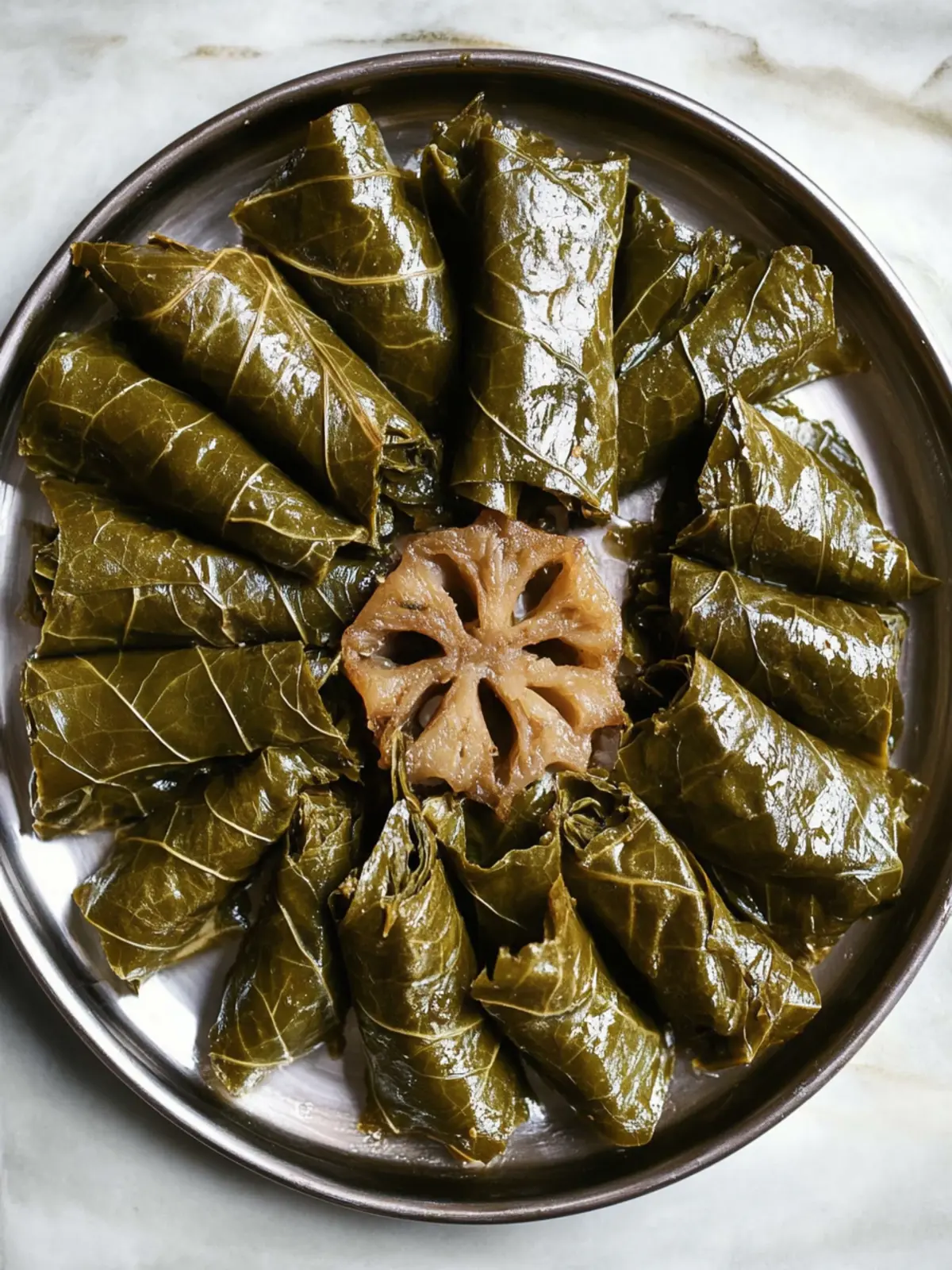
Warak Enab Recipe FAQs
How do I select the best grape leaves for Warak Enab?
When choosing grape leaves, look for fresh, vibrant green leaves without any dark spots or signs of wilting. If you’re using jarred grape leaves, opt for high-quality brands without added preservatives. Make sure to blanch jarred leaves to reduce any bitterness before using.
How should I store leftover Warak Enab?
Store your leftover Warak Enab in an airtight container in the refrigerator for up to 5-6 days. This keeps them fresh and juicy. If you know you won’t eat them within this time frame, freezing is an excellent option!
Can I freeze Warak Enab?
Absolutely! To freeze your Warak Enab, first lay the rolls in a single layer on a baking sheet and freeze them until solid. Then, transfer the frozen rolls into a freezer-safe bag. They can be stored for up to 3 months. When ready to eat, thaw them overnight in the fridge and gently reheat.
What should I do if my grape leaves tear during rolling?
It happens to the best of us! If your grape leaves tear, simply use a small piece of another leaf to patch the hole. Place the filling in the center, fold the sides, and roll it up tightly. It will still cook beautifully and taste just as delicious!
Is Warak Enab suitable for a gluten-free diet?
Yes, indeed! Warak Enab can be made gluten-free by substituting rice with another gluten-free grain, such as quinoa or millet. Just ensure that any spices or additional ingredients you use are also gluten-free for a safe and satisfying meal.
Can I use different meats or make a vegetarian version?
Certainly! You can swap the ground beef with lamb for a different flavor, or even use finely chopped vegetables and legumes for a delightful vegetarian version. Combining cooked lentils with spices and rice makes a delicious filling that everyone will love!
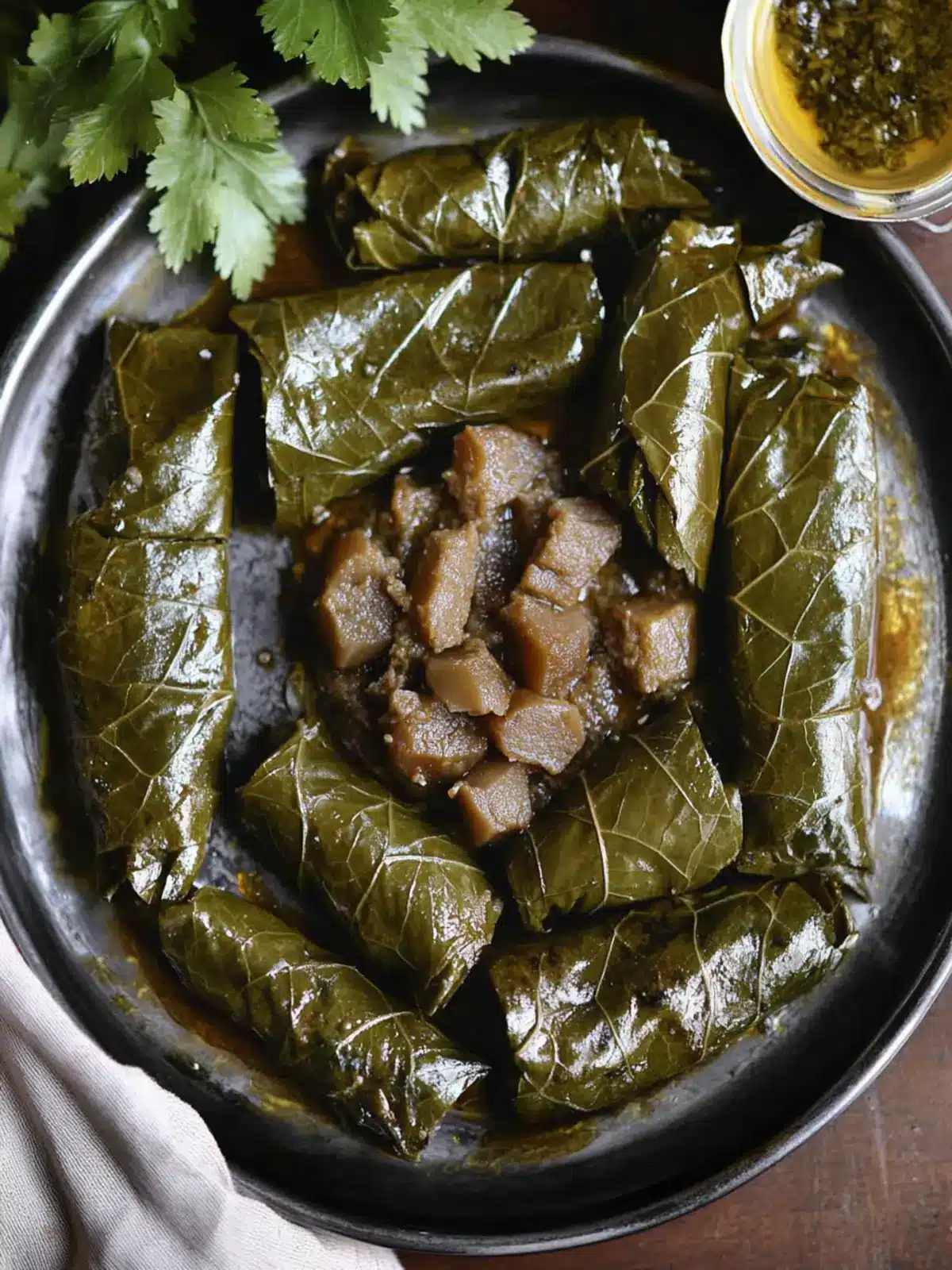
Delicious Warak Enab: Savory Lebanese Grape Leaves Recipe
Ingredients
Equipment
Method
- Blanch jarred grape leaves in boiling water for a few minutes to reduce the briny flavor. If using fresh, rinse thoroughly and set aside to cool.
- In a large bowl, mix ground beef or lamb with rice, baharat spice blend, olive oil, lemon juice, salt, and pepper until well combined.
- Place a grape leaf on a clean surface, veiny side up, and spoon about one tablespoon of filling at the base of the leaf. Fold up the bottom over the filling, fold in the sides, and roll tightly but gently to avoid bursting.
- Layer the bottom of a pot with tenderloin chops (optional). Place rolled grape leaves snugly in the pot, arranging in layers if necessary.
- Pour in enough water or broth to cover the rolls halfway. Simmer on low heat for about 1.5 to 2 hours until the rice is fluffy and meat is tender.