
If you’ve ever craved a comforting bowl of flavor that also feels nourishing, you’re in for a treat with this Healthy Vegan Bibimbap! Picture this: a vibrant palette of fresh vegetables cascading over a warm bed of rice, all drizzled with a spicy miso sauce that dances on your taste buds. I first stumbled upon this recipe while exploring the depths of my pantry, realizing I had just the right ingredients to recreate an authentic taste of Korea at home.
This dish isn’t just a feast for the eyes; it’s also incredibly versatile and perfect for meal prep or a quick weeknight dinner. Each colorful ingredient can be customized to your liking, and the easy-to-follow steps mean you’ll be savoring deliciousness in no time. Whether you’re a seasoned chef or a home cook looking to break free from fast food, this Easy Vegan Bibimbap will become a beloved staple in your kitchen. So, let’s dive into how to make this delightful, wholesome bowl!
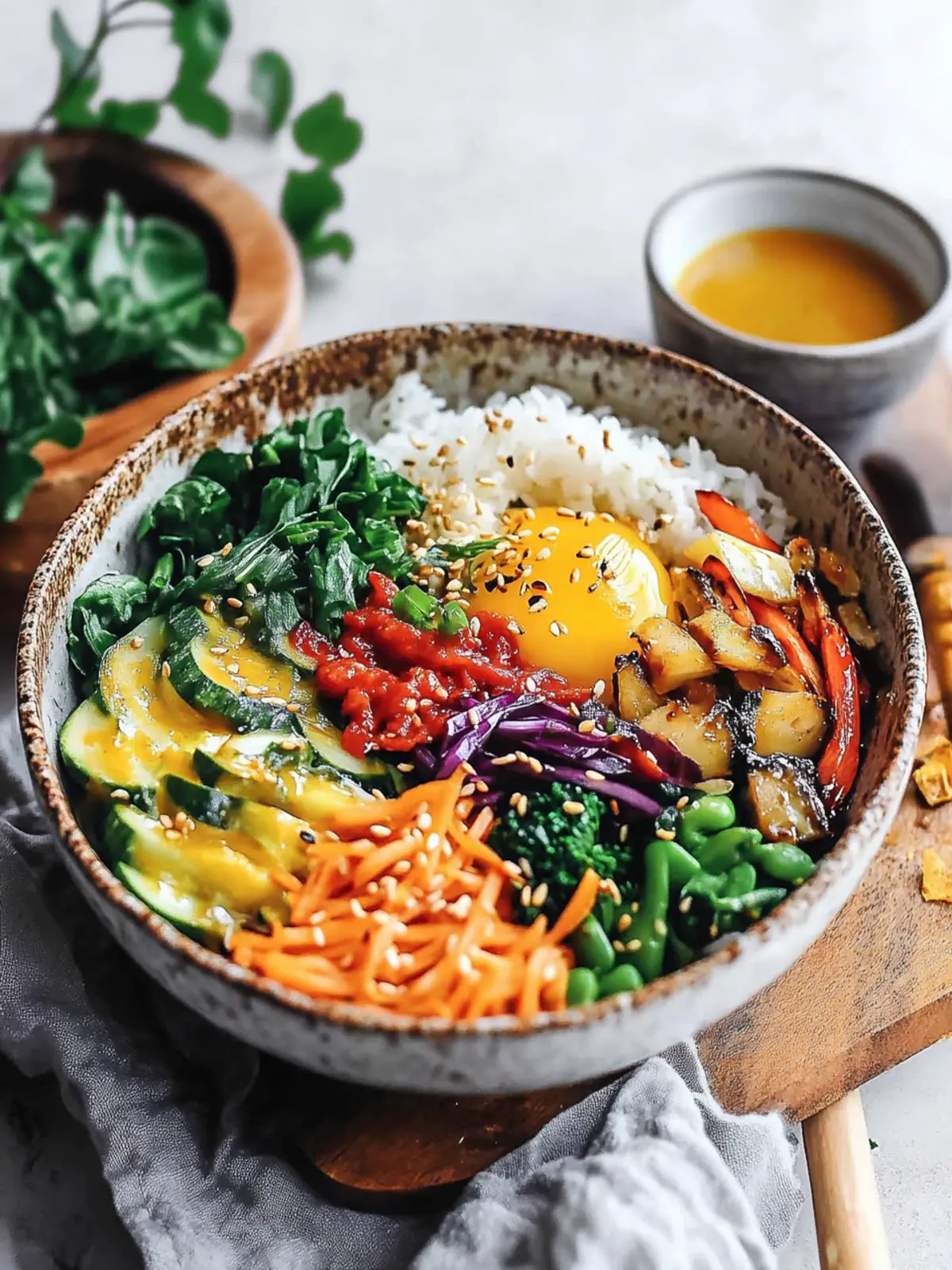
Why is this Healthy Vegan Bibimbap a Must-Try?
Vibrant Colors: Each ingredient in this dish bursts with color, making your meal as appealing as it is nutritious.
Quick Prep: Ready in under 30 minutes, it’s perfect for busy weeknights or meal prepping for the week ahead!
Endless Customization: Tailor it to suit your taste with any of your favorite veggies or add proteins like tofu.
Deliciously Nutritious: Packed with vitamins, minerals, and fiber; it’s a low-calorie option that fills you up without weighing you down.
Cultural Delight: Enjoy the authentic flavors of Korea from the comfort of your home, introducing a new culinary experience to your table.
Whether you’re a fan of Korean cuisine or simply looking to brighten your weekly meals, the Healthy Vegan Bibimbap is sure to amaze! For more vibrant and nutritious options, check out our meal prep ideas.
Healthy Vegan Bibimbap Ingredients
For the Rice
• Brown Rice – Acts as a wholesome base for this Healthy Vegan Bibimbap; substitute with white rice for quicker cooking.
For the Vegetables
• Kale – Provides a nutritious crunch; consider using spinach for a milder flavor.
• White Mushrooms – A low-calorie meat alternative, perfect when sautéed; shiitake or portobello are great substitutes too.
• Carrot – Adds a sweet crunch; zucchini can serve as a fresh alternative.
• Red Bell Pepper – Brings vibrant color and juice; feel free to swap for yellow or orange peppers.
• Red Cabbage – Offers a lovely crunch and beautiful color; green cabbage can easily be used instead.
• Fresh Cilantro – Adds a bright, fresh flavor; if you’re not a fan, parsley works splendidly too.
For the Sauce
• Miso Paste – The key element for flavor in your spicy sauce; nutritional yeast can add a cheesy twist if needed.
• Sesame Seeds – Provide a nutty crunch; replace with chopped nuts or sunflower seeds for variety.
• Soy Sauce – Elevates the dish with umami; go for coconut aminos if you’re avoiding soy.
• Rice Wine Vinegar – Adds acidity to balance flavors; apple cider vinegar can be a convenient substitute.
• Fresh Ginger – Offers a zesty kick; ground ginger can work in a pinch.
• Garlic Clove – Adds depth to the sauce; garlic powder is a quick alternative.
• Water – To adjust the consistency of your sauce as necessary.
• Cayenne Pepper – Adds spice to the miso sauce; you can adjust the amount based on your heat preference.
Get ready to experience a healthy and delicious meal that you’ll want to make time and time again!
How to Make Healthy Vegan Bibimbap
-
Cook Rice: Prepare your brown rice according to package instructions. It should be fluffy and tender, setting the perfect foundation for your Vegan Bibimbap.
-
Roast Kale: Toss kale with a pinch of salt and massage it to encourage crunchiness. Bake at 400°F (200°C) for 10-15 minutes until the leaves are crispy and vibrant.
-
Sauté Vegetables: Heat a pan over medium heat and toss in the sliced white mushrooms. Sauté for 6-8 minutes until mushrooms are golden, then add soy sauce for delicious flavor.
-
Prepare Miso Sauce: In a saucepan, combine miso paste and water. Simmer for 3-5 minutes until smooth, then stir in rice wine vinegar, fresh ginger, cayenne, and minced garlic for an umami-rich sauce.
-
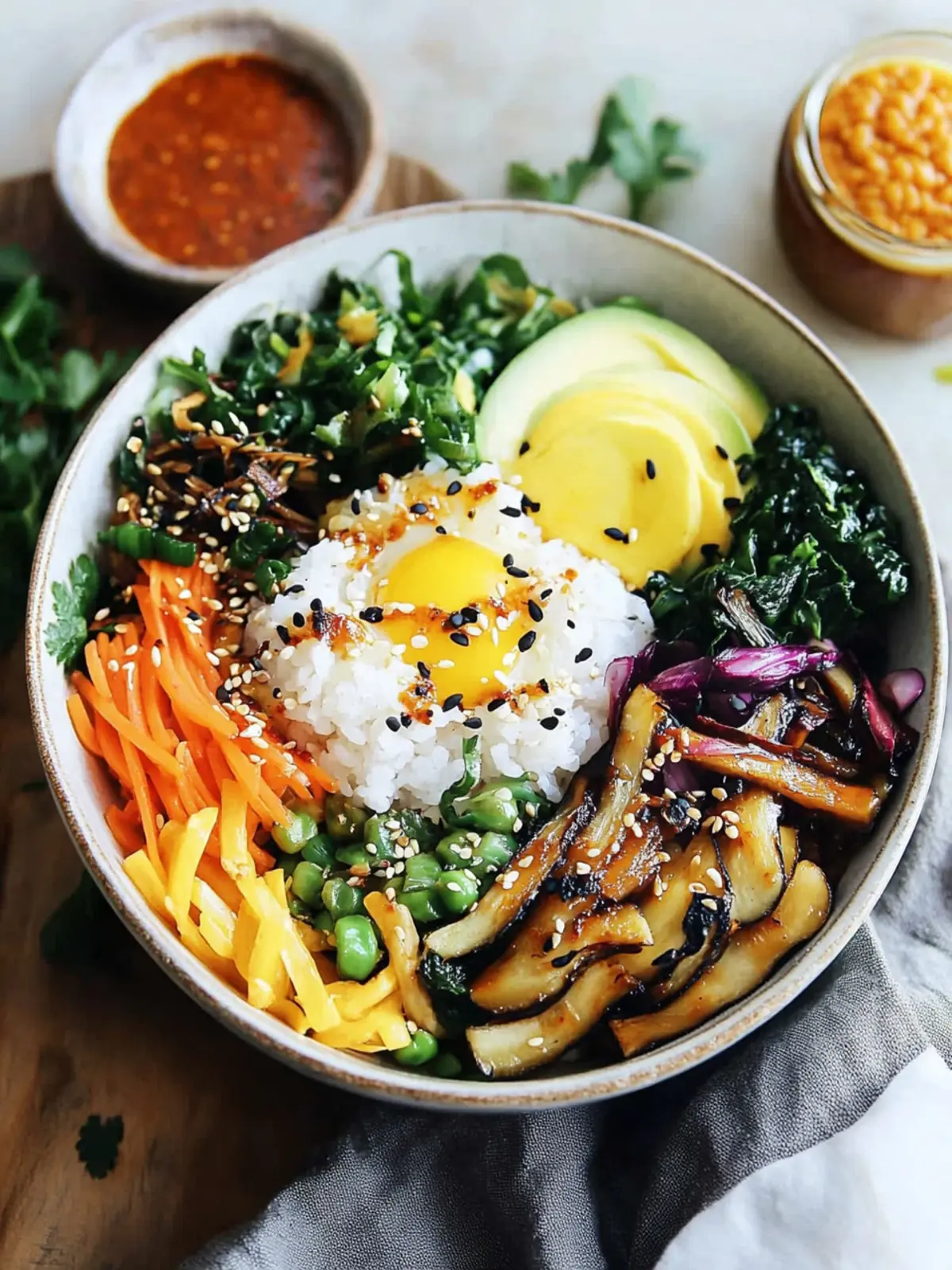
Assemble Your Bowl: Start with a layer of rice in your bowl, then beautifully arrange the roasted kale, sautéed mushrooms, shredded carrot, red bell pepper, and red cabbage on top. Drizzle with miso sauce and sprinkle fresh cilantro and sesame seeds for the finishing touch.
Optional: Add a sprinkle of crushed red pepper for an extra kick!
Exact quantities are listed in the recipe card below.
Storage Tips for Healthy Vegan Bibimbap
Fridge: Store any leftover Healthy Vegan Bibimbap components in airtight containers for up to 4 days to maintain freshness.
Freezer: You can freeze the individual components, especially the sautéed vegetables, for up to 3 months. Just allow them to cool before freezing.
Reheating: When ready to enjoy, reheat in the microwave for 2-3 minutes or until heated through. For best results, reheat each component individually to preserve texture.
Assembly: Only assemble the bowl right before serving, as this will keep the crispy kale and vegetables fresh and vibrant!
Healthy Vegan Bibimbap Variations
Feel free to enhance your Vegan Bibimbap with these delightful adaptations, allowing you to make it truly yours!
-
Protein Boost: Add pan-fried tofu or tempeh for a hearty touch. Simply marinate them in soy sauce before cooking for extra flavor.
-
Seasonal Veggies: Customize with whatever fresh vegetables are in season, like zucchini or snow peas, to keep your meal vibrant and exciting.
-
Spice It Up: Incorporate kimchi or a dollop of Gochujang to introduce traditional Korean heat! These additions will transform the flavor profile into something spectacular.
-
Grain Swap: Use quinoa or cauliflower rice instead of brown rice for a unique texture and lower-carb option. Each choice contributes a different taste and nutritional value.
-
Herb Variants: If cilantro isn’t your favorite, fresh basil or mint can be swapped in, offering a completely different aromatic profile to delight your taste buds.
-
Nutty Twist: For an extra crunch, throw in some toasted pine nuts or slivered almonds. Their nutty taste elevates the dish’s texture and flavor.
-
Creamy Sauce: Blend in a spoonful of tahini or a drizzle of avocado for a creamy, indulgent twist, creating a rich mouthfeel that complements the other elements beautifully.
Each of these variations invites you to explore new flavors and textures, ensuring your Healthy Vegan Bibimbap delights with each bite!
What to Serve with Healthy Vegan Bibimbap (Korean Rice Bowl)?
Elevate your delightful bowl of flavors with sides that complement the vibrant and nourishing elements of this dish.
-
Pickled Vegetables: Bright and tangy, these add a refreshing crunch that balances the spiciness of the miso sauce.
-
Edamame: Lightly salted and rich in protein, edamame offers a nutty flavor that harmonizes beautifully with the dish.
-
Crispy Tofu: Marinated and pan-fried, this adds a satisfying crunch and protein boost, making every bite even more fulfilling.
-
Miso Soup: A warm, savory soup enhances the meal’s umami elements, providing a comforting start before diving into the bibimbap.
-
Green Salad: A simple mix of greens with a zesty dressing brightens your meal, adding freshness and a crisp contrast to the warm rice bowl.
-
Korean Pancakes (Pajeon): These savory pancakes filled with scallions add a delightful texture, perfect for dipping in soy sauce.
-
Gochujang Sauce: An extra dollop of this spicy condiment can elevate the flavor profile of your bibimbap, intensifying those delightful spicy notes.
-
Chilled Green Tea: Refreshing and slightly bitter, this drink is a perfect palate cleanser that enhances the meal’s overall experience.
Make Ahead Options
These Healthy Vegan Bibimbap bowls are perfect for meal prep enthusiasts looking to save time during busy weekdays! You can prepare the rice and veggies up to 3 days ahead of time, storing them separately in airtight containers in the refrigerator to maintain their freshness and crunch. To keep the kale crispy, bake it shortly before serving rather than pre-cooking it. When you’re ready to enjoy your bibimbap, simply reheat the rice and sauté the mushrooms with soy sauce, then assemble everything in a bowl. Drizzle your prepared spicy miso sauce over the top for a delicious, restaurant-quality meal with minimal effort!
Expert Tips for Healthy Vegan Bibimbap
Fresh Ingredients: Use the freshest vegetables you can find to enhance flavor and nutrition. Old veggies can spoil the overall taste of your Healthy Vegan Bibimbap.
Pre-Cook Tofu: If adding tofu for protein, marinate and pan-fry it before assembling. This adds wonderful depth and flavor to your dish.
Rice Choices: For the best texture, rinse brown rice before cooking to remove excess starch, ensuring fluffy grains in your bibimbap.
Sauce Consistency: Adjust miso sauce thickness by slowly adding water. A thicker sauce can overpower the dish, so find a balance that complements the veggies.
Meal Prep Tip: Prepare each component separately and store in airtight containers. This keeps them fresh, making it easier to assemble your Healthy Vegan Bibimbap throughout the week.
Customize Yourself: Don’t hesitate to swap vegetables based on what’s in season or what you have on hand. Flexibility is key in creating your perfect bibimbap!
Healthy Vegan Bibimbap Recipe FAQs
How do I select the best ingredients for my Healthy Vegan Bibimbap?
Absolutely! When choosing vegetables, look for vibrant colors and firm textures. Avoid vegetables with dark spots or wilting, as these indicate they may be past their prime. For the brown rice, opt for whole grains that feel dry and are free from moisture or bugs. If you can find fresh cilantro, it should have bright green leaves and a fragrant aroma—those are indicators of freshness!
How should I store leftover Healthy Vegan Bibimbap?
Very good question! Store leftover components in airtight containers in the refrigerator for up to 4 days. This will help maintain their freshness and nutrients. Keep the crispy kale separate from the moist ingredients to prevent sogginess. Each component can be assembled quickly when you’re ready to eat!
Can I freeze my Healthy Vegan Bibimbap components?
Certainly! You can freeze the sautéed vegetables and cooked rice separately for up to 3 months. To freeze properly, allow each component to cool completely, then portion them into freezer-safe bags or containers. Make sure to label them with the date—this way, you’ll keep track of freshness!
What should I do if my miso sauce is too thick?
Not a problem! If your miso sauce becomes too thick, just add a little water, a tablespoon at a time, to reach your desired consistency. Remember to stir well as you add water to ensure it blends smoothly. If it turns out too thin, let it simmer for a few more minutes to reduce it slightly. A well-balanced sauce is key to a delicious bibimbap!
Can I make this dish gluten-free?
Absolutely! To ensure your Healthy Vegan Bibimbap is gluten-free, use a certified gluten-free soy sauce or coconut aminos as a substitute. This will maintain all the depth of flavor without the gluten. Be mindful of the other ingredients too, such as rice vinegar and any pre-packaged items, to keep your meal safe for gluten sensitivity or allergies.
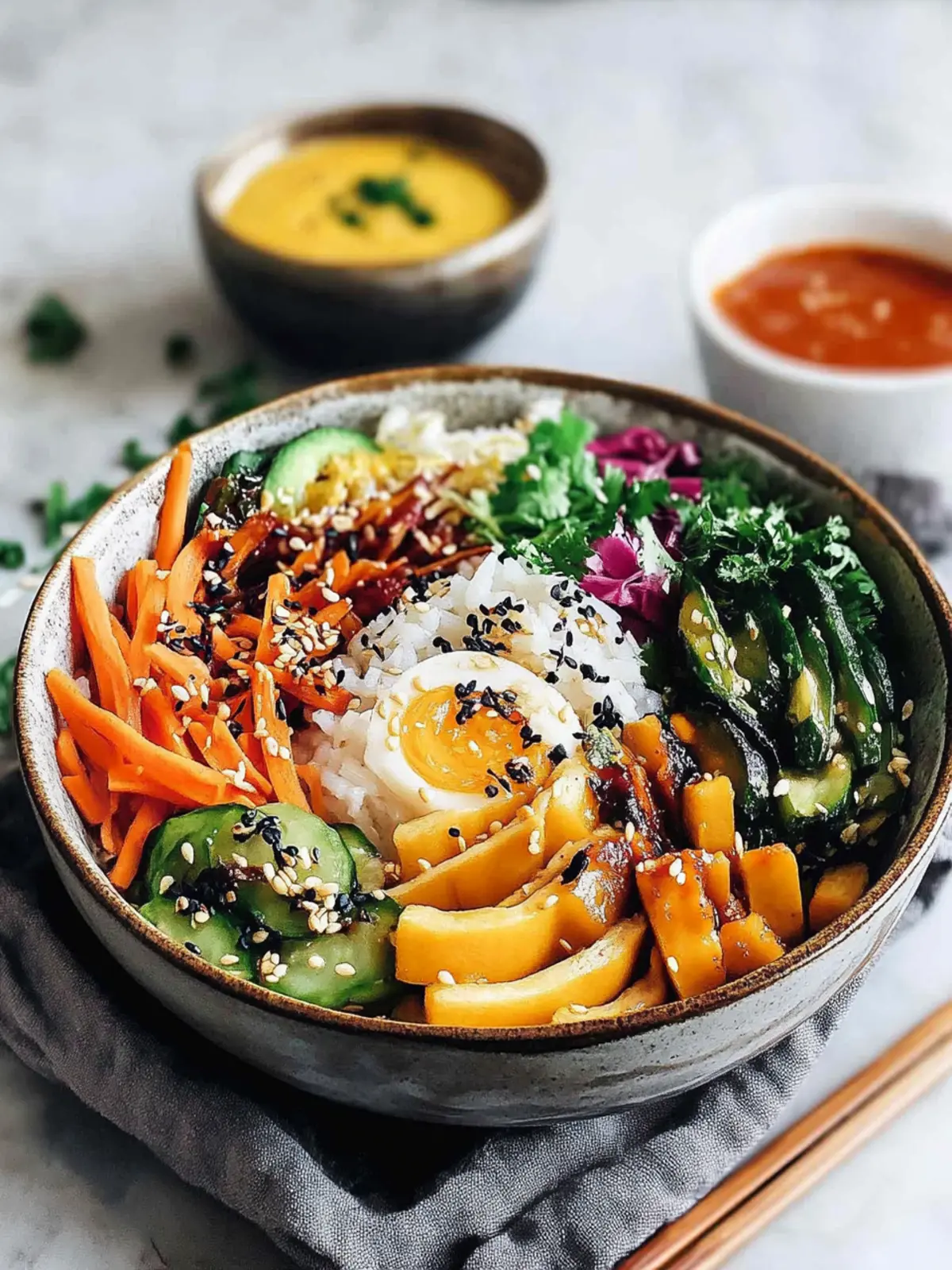
Delicious Healthy Vegan Bibimbap for Effortless Meal Prep
Ingredients
Equipment
Method
- Prepare your brown rice according to package instructions.
- Toss kale with a pinch of salt and massage it, then bake at 400°F (200°C) for 10-15 minutes.
- Sauté sliced white mushrooms in a pan over medium heat for 6-8 minutes, adding soy sauce.
- Combine miso paste and water in a saucepan and simmer for 3-5 minutes, then add other sauce ingredients.
- Layer rice, then add roasted kale, sautéed mushrooms, shredded carrot, red bell pepper, and red cabbage. Drizzle with miso sauce and sprinkle with cilantro and sesame seeds.