
There’s a unique warmth that envelops you as the steam rises from a bowl of miso soup, reminding you that comfort can be just a few ingredients away. I first discovered this soothing dish during a cozy night in, where the familiar umami flavor quickly turned into a staple in my kitchen. With a hearty broth, silky tofu, and vibrant greens, it’s one of those recipes that redefines what quick and easy can be.
As the chilly winds of autumn approach, I find myself craving a bowl of this delicious soup, a simple yet satisfying meal that never fails to lift my spirits. This classic Japanese miso soup is not just a dish; it’s an experience—perfect for a solo dinner or impressing guests effortlessly. Packed with wholesome ingredients like dashi, nori, and fresh veggies, you can easily personalize it while still enjoying its comforting essence. Let me guide you through the steps to create this delightful bowl of warmth right in your kitchen!
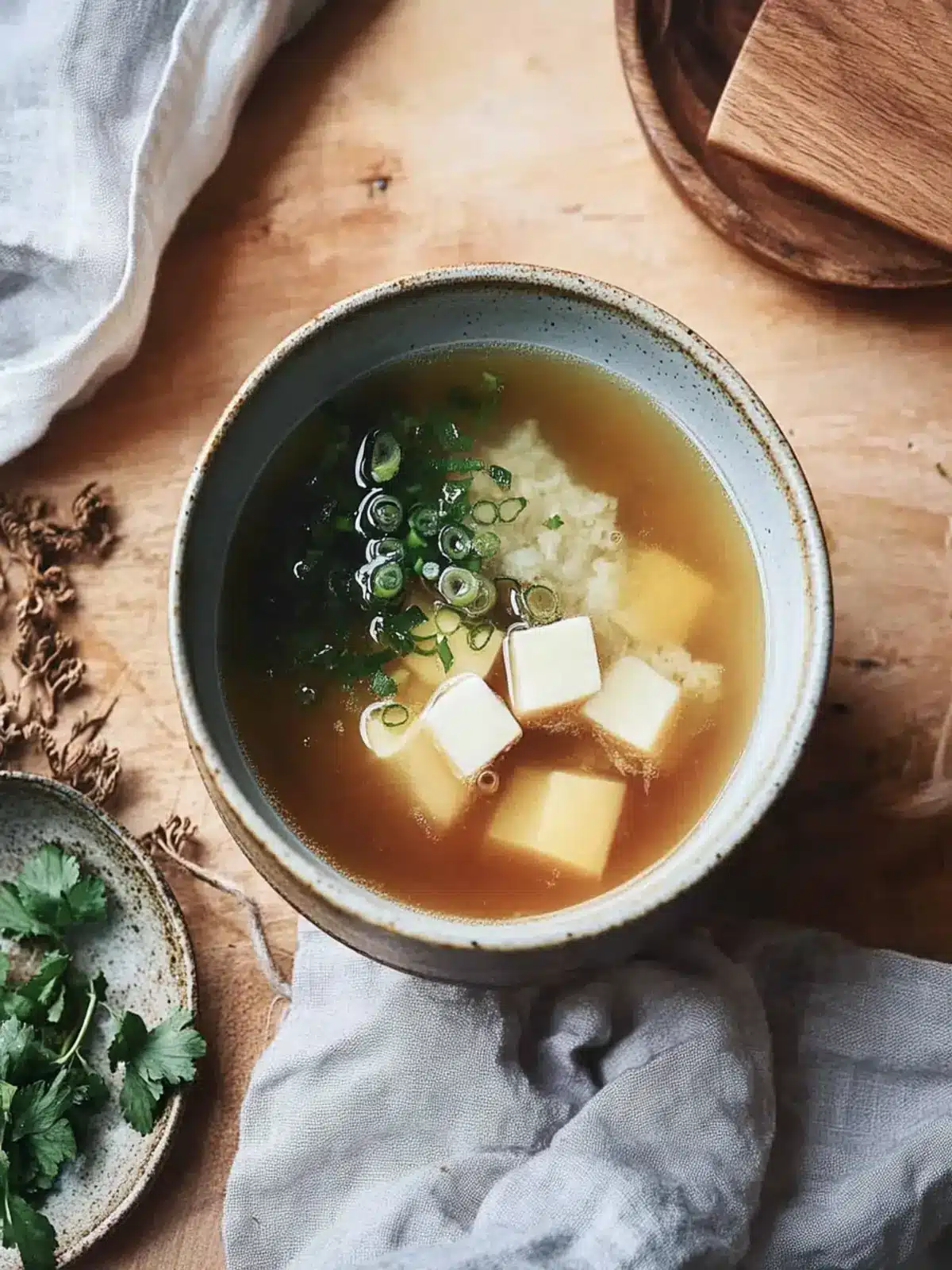
How to Make Miso Soup Simply?
Comfort: This miso soup recipe is the epitome of comfort food, providing warmth and satisfaction in every slurp.
Quick Prep: With minimal prep and just a few ingredients, it can be on your table in about 20 minutes.
Nutritious Boost: Packed with protein from tofu and essential nutrients from greens, it’s a wholesome choice for any meal.
Versatile: Feel free to customize with your favorite vegetables or proteins for a personal touch that still highlights the classic flavor.
Crowd-Pleaser: Whether hosting friends or enjoying a quiet night in, this cozy soup is sure to impress everyone at the table.
Hearty Flavor: The umami-rich broth, infused with dashi and miso, delivers a depth of flavor that’s simply irresistible.
How to Make Miso Soup Ingredients
• Kickstart your culinary adventure with these essential ingredients!
For the Broth
- Dashi – This base broth offers authentic Japanese flavor; consider using vegetable broth for a lighter note.
- Red Miso Paste – This is the heart of your soup, delivering rich umami; if you prefer something milder, opt for white miso instead.
For the Vegetables
- Green Chard – Adds vibrant color and nutrients; you can swap in spinach or kale if these are on hand.
- Green Onions – A fresh garnish that also adds a mild onion flavor; substitute with regular onions for a stronger taste.
For the Protein
- Firm Tofu – Provides substance and protein; for a creamier texture, silken tofu can be used, creating a cozy richness.
For the Seaweed
- Nori – Adds depth and a subtle briny flavor; if unavailable, feel free to use other dried seaweed varieties in its place.
With these ingredients prepped, you’re just moments away from enjoying the delightful and cozy experience that miso soup brings!
How to Make Miso Soup
-
Heat the dashi
Begin by pouring 4 cups of dashi into a medium saucepan. Heat it over medium-high heat until it gently simmers; be careful not to let it boil, as this can affect the flavor. -
Add the greens
Stir in the chopped green chard and sliced green onions into the simmering dashi. Let them simmer for about 3-5 minutes until the greens are tender and vibrant. -
Incorporate the tofu
Gently stir in the cubed firm tofu and allow it to warm through for another 1-2 minutes. This will give you a lovely texture in each spoonful. -
Mix in the nori
Cut the nori into thin strips and add them to the soup. Watch as they soften and infuse the broth with their unique flavor. -
Dissolve the miso
In a small bowl, combine 4 tablespoons of red miso paste with a few spoonfuls of the hot broth. Stir until smooth, then pour this mixture back into the soup pot. -
Finish the soup
Remove the soup from heat immediately after adding the miso. Gently stir to combine, taste, and adjust the seasoning with more miso or a pinch of sea salt if needed. -
Serve warm
Ladle the miso soup into bowls and enjoy the warmth and comforting flavors immediately!
Optional: Garnish with extra green onions or sesame seeds for added crunch.
Exact quantities are listed in the recipe card below.
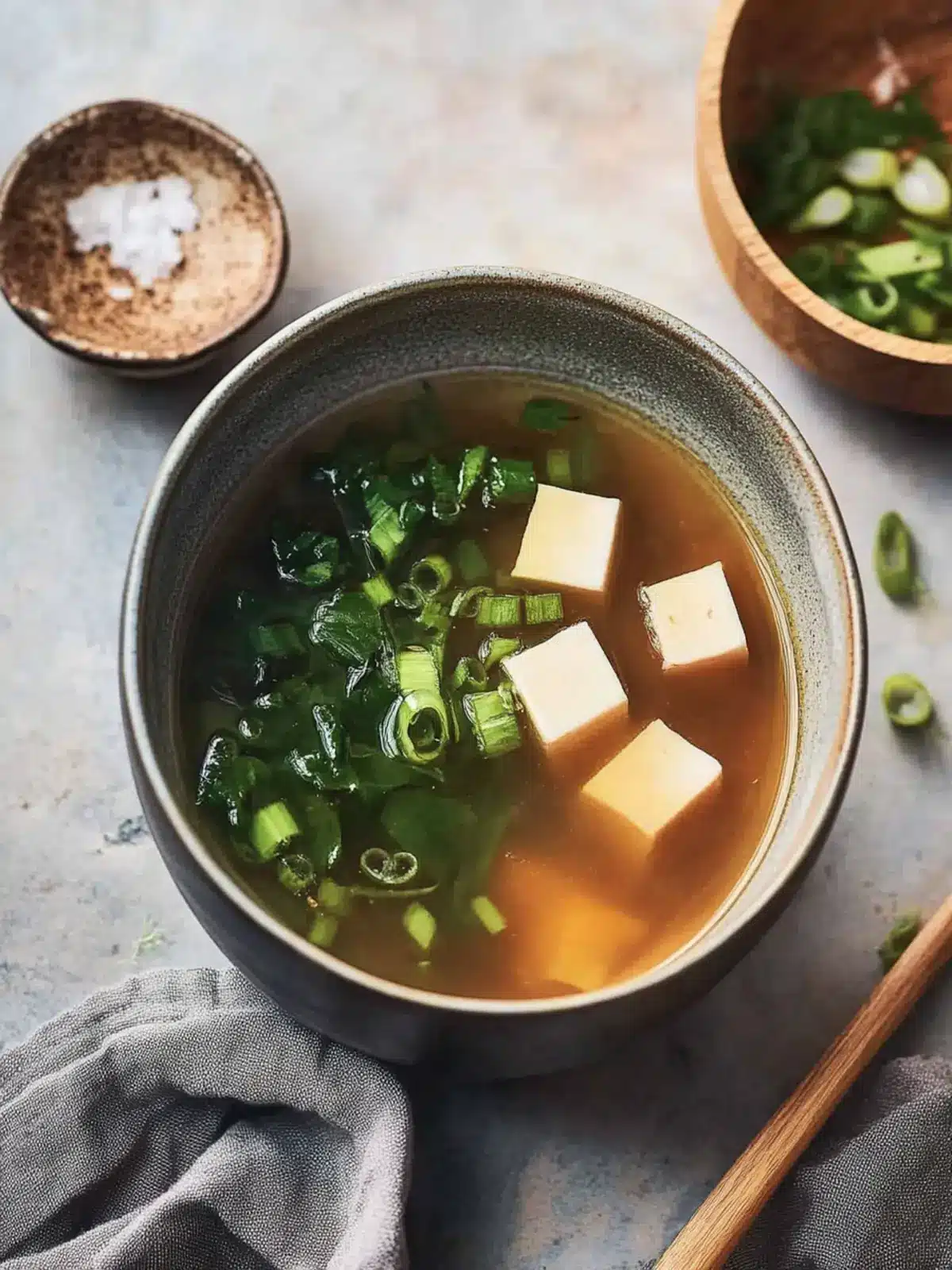
Expert Tips for Miso Soup
-
Simmer, Don’t Boil: Avoid boiling the soup after adding miso to preserve its flavor and health benefits, keeping the dish delicately balanced.
-
Fresh Ingredients: Use fresh vegetables when possible; they enhance flavor and nutrition. Keep in mind that softer vegetables should be added later to prevent sogginess.
-
Taste as You Go: After dissolving the miso in broth, taste the soup before serving. Adjust with more miso or a pinch of sea salt to satisfy your taste buds.
-
Dashi Matters: The type of dashi used impacts the final flavor of your soup. Opt for traditional dashi for authenticity, or a vegetable broth if you need a lighter option.
-
Customize Proteins: For a heartier miso soup, consider adding proteins like shrimp or cooked chicken, while keeping the classic flavors intact.
-
Storage Tips: Store any leftover miso soup in an airtight container for 2-3 days. Gently reheat on the stove over low heat to maintain its delightful flavor.
What to Serve with Miso Soup?
There’s nothing quite like a bowl of comforting miso soup to warm your soul, and pairing it with complementary dishes can elevate your meal to new heights.
-
Sushi Rolls: The freshness of sushi pairs wonderfully with the savory miso soup, offering a delightful contrast that enhances both.
-
Tempura: Crispy, battered vegetables or shrimp provide an irresistible crunch against the smooth broth, making each bite a uniquely satisfying experience.
-
Pickled Vegetables: Their tangy, punchy flavors provide a vibrant contrast to the rich umami notes of the miso, refreshing your palate beautifully.
-
Steamed Rice: A side of fluffy rice can soak up the delicious broth and make the meal even more filling—perfect for those colder days!
-
Grilled Fish: Delicate grilled fish, like salmon or mackerel, complements the soup’s flavors while adding a lovely texture that balances the meal.
-
Green Salad: A light, citrus-dressed green salad offers a fresh crunch that brightens up the meal, making it feel airy and balanced.
For a truly comforting dining experience, consider serving your bowl of miso soup alongside any of these delightful options!
Make Ahead Options
These miso soup preparations are a lifesaver for busy home cooks! You can chop the green chard, green onions, and tofu up to 3 days in advance and store them in airtight containers in the refrigerator to maintain freshness. Additionally, you can prepare the dashi broth a day ahead and simply reheat it when you’re ready to serve. To ensure the best flavor, hold off on adding the miso paste until just before serving—this maintains its health benefits and rich taste. When you’re ready to enjoy your cozy bowl of miso soup, reheat the prepared ingredients in the broth, stir in the dissolved miso, and serve warm for a comforting and convenient meal that’s just as delicious as fresh!
Miso Soup Variations
There’s always room for creativity in your kitchen, so let your taste buds explore these delicious options!
-
Dairy-Free: Replace firm tofu with silken tofu for a creamier texture, perfect for a velvety mouthfeel. Its softness adds a delightful contrast to the broth.
-
Gluten-Free: Ensure your miso paste is gluten-free, or substitute with tamari for a similar flavor without the gluten. This way, everyone can enjoy a comforting bowl!
-
Vegetable Boost: Toss in shiitake mushrooms, bok choy, or carrot slices to elevate your soup’s nutritional value and flavor profile. These options enhance both texture and depth in every sip.
-
Protein-Packed: Add shrimp or cooked, shredded chicken to create a heartier meal that satisfies even the hungriest family members. It’s a wonderful way to turn a light soup into a filling dish.
-
Spicy Kick: Stir in a dash of chili oil or some sliced jalapeños for an exciting heat level that warms you from the inside out. Just a little can make all the difference in flavor!
-
Herbal Infusion: Fresh herbs like cilantro or basil right before serving can add a burst of freshness. This unexpected twist can brighten every bowl, inviting new aroma to your dining experience.
-
Coconut Cream: For a tropical twist, swirl in a tablespoon of coconut cream instead of some of the dashi. Tasting this fusion of flavors will make each spoonful feel like a warm embrace.
-
Toasted Nori Dust: Crumble some toasted nori over the top for a crunchy texture and an extra umami punch. It adds a lovely contrast that makes each bite captivating.
How to Store and Freeze Miso Soup
Fridge: Store cooled miso soup in an airtight container for up to 2-3 days. This keeps it fresh while maintaining its comforting flavors.
Freezer: If you want to keep it longer, you can freeze the miso soup for up to 1 month. Just ensure it’s completely cooled and use freezer-safe containers.
Reheating: When you’re ready to enjoy your soup, gently reheat it on the stove over low heat until warmed through. Avoid boiling to preserve the delicate flavors and nutrients.
Add Freshness: For the best experience, add fresh green onions or any other fresh veggies just before serving after reheating to maintain their crispness.

How to Make Miso Soup Recipe FAQs
What type of dashi should I use for miso soup?
I recommend using traditional dashi for an authentic flavor, which is made from bonito (dried fish) and kombu (dried kelp). However, if you prefer a vegetarian option, vegetable broth works beautifully as a lighter alternative.
How do I store leftover miso soup?
Store your cooled miso soup in an airtight container in the refrigerator for 2-3 days. This keeps it fresh while allowing you to enjoy its comforting flavors over the next few days. Just remember to reheat it gently on the stove over low heat to maintain its delightful taste.
Can I freeze miso soup?
Absolutely! You can freeze miso soup for up to 1 month. Ensure it’s completely cooled before transferring it to freezer-safe containers. When you’re ready to enjoy it, simply thaw it in the fridge overnight and gently reheat, avoiding boiling to preserve the delicate flavors.
What if my soup tastes too salty?
If your miso soup ends up too salty, it’s often due to the miso paste or the dashi. To fix this, adding more water or vegetable broth is a great solution. You can also include additional vegetables or tofu to balance out the flavors—just remember to simmer them until tender.
Are there any allergies I should consider when making miso soup?
Yes, miso can contain soybeans and wheat, so it’s important to check the labels if you are making this for someone with allergies. For a gluten-free option, look for gluten-free miso paste. Always ensure all your ingredients align with any dietary restrictions.
Can I add other ingredients to my miso soup?
The more the merrier! Miso soup is wonderfully versatile. Feel free to add vegetables like shiitake mushrooms, bok choy, or carrots for extra flavor and nutrition. You can also experiment with proteins like cooked chicken or shrimp to create a heartier dish!

How to Make Miso Soup for Ultimate Comfort at Home
Ingredients
Equipment
Method
- Begin by pouring 4 cups of dashi into a medium saucepan. Heat it over medium-high heat until it gently simmers.
- Stir in the chopped green chard and sliced green onions into the simmering dashi. Let them simmer for about 3-5 minutes.
- Gently stir in the cubed firm tofu and allow it to warm through for another 1-2 minutes.
- Cut the nori into thin strips and add them to the soup.
- Combine 4 tablespoons of red miso paste with a few spoonfuls of the hot broth. Stir until smooth, then pour this mixture back into the soup pot.
- Remove the soup from heat immediately after adding the miso. Gently stir to combine, taste, and adjust seasoning.
- Ladle the miso soup into bowls and enjoy warm!