
The first bite of a Japanese Katsu Bowl is like a warm hug, filled with layers of flavor and texture that transport you straight to a bustling Tokyo eatery. Just imagine crispy, golden-fried chicken, perfectly seasoned, resting atop a bed of fluffy rice, eagerly soaking up a drizzle of rich tonkatsu sauce. This dish isn’t just a meal; it’s an experience that beckons comfort and joy, turning any weeknight dinner into a delightful occasion.
After a hectic day, I found solace in creating this simple yet impressive Japanese Katsu Bowl. What makes it even better? You can customize it easily—choose between juicy chicken, tender pork, or a delicious vegetarian twist using tofu or fresh vegetables. So gather your favorite ingredients, and let’s dive into a culinary journey that’ll leave everyone at the table asking for seconds!
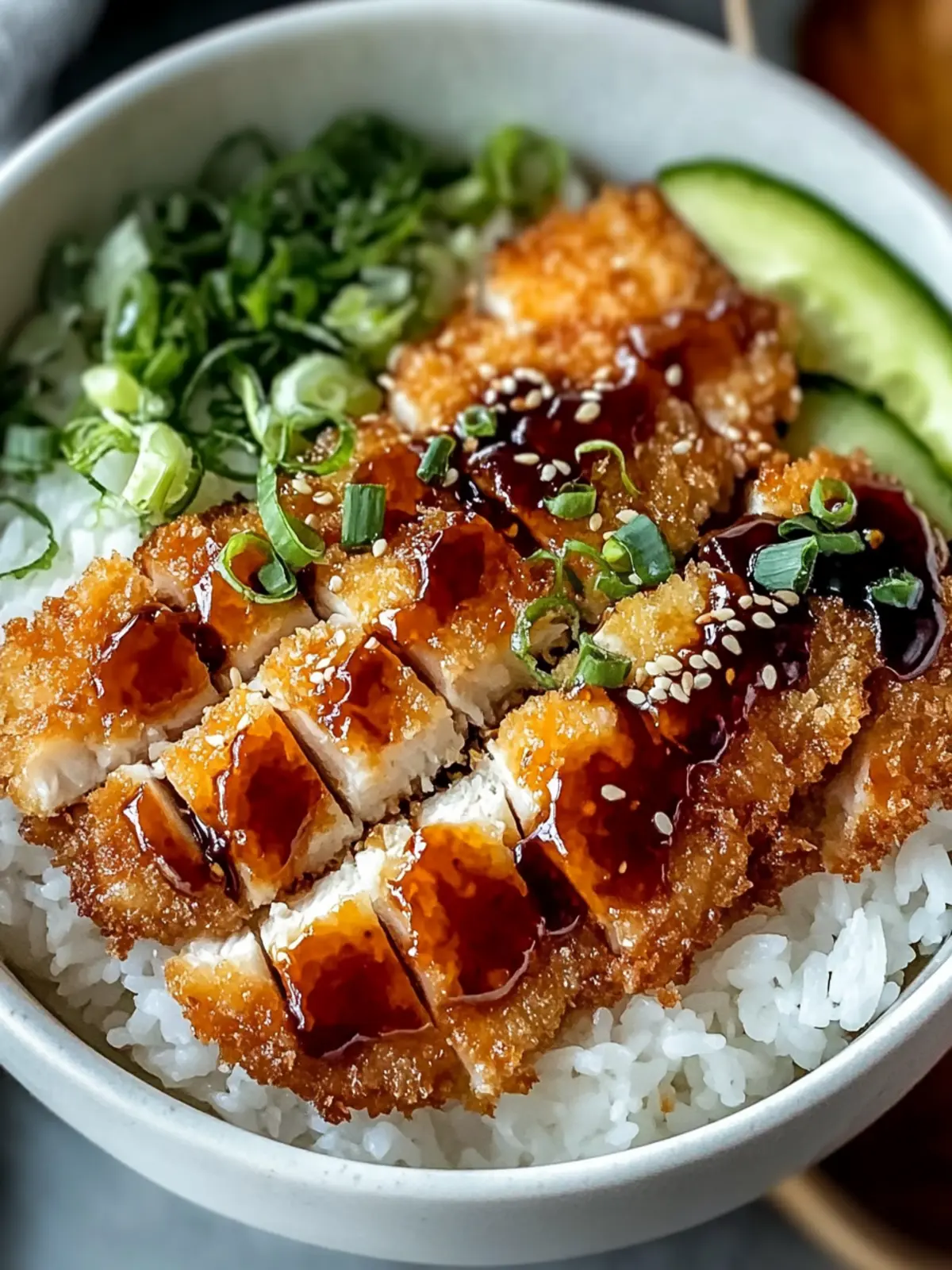
Why Love This Japanese Katsu Bowl Recipe?
Simplicity at Its Best: This Japanese Katsu Bowls Tonkatsu Sauce Recipe is incredibly easy to prepare, making it perfect for busy weeknights.
Customizable Options: Choose your favorite protein—chicken, pork, or even tofu for a plant-based delight!
Rich, Flavorful Sauce: The homemade tonkatsu sauce elevates the dish, creating a sweet and tangy finish that everyone will love.
Crowd-Pleasing Appeal: Perfect for family dinners or gatherings, it brings a nostalgic touch to any table.
Texture Paradise: Enjoy the crispy katsu paired with fluffy rice, making each bite a delightful experience.
Quick Cooking Time: With only a few steps, you can have this impressive dish ready in no time, leaving you more moments to savor the meal.
Embark on this tasty adventure and explore more with your family and friends!
Japanese Katsu Bowls Tonkatsu Sauce Ingredients
• Dive into making the perfect Japanese Katsu Bowls Tonkatsu Sauce Recipe with these essential ingredients!
For the Katsu
- Boneless Skinless Chicken Breasts (or Pork Chops) – Core protein; tender and juicy, essential for katsu.
Substitution Note: Use firm tofu or eggplant for a vegetarian option. - All-Purpose Flour – Coating enhancer; helps breadcrumbs adhere for a crispy crust.
Substitution Note: Gluten-free flour can be used for gluten-free versions. - Large Eggs (Beaten) – Binds the flour and panko breadcrumbs, contributing to the crispy texture.
Substitution Note: For vegans, use a flaxseed egg. - Panko Breadcrumbs – Provides crunch and texture that distinguishes katsu.
Notes: Do not substitute with regular breadcrumbs for best results. - Salt – Enhances overall flavor throughout the dish.
Notes: Opt for kosher or sea salt for better taste. - Black Pepper – Adds mild heat; adjust to preference.
- Garlic Powder – Boosts the savory aroma and flavor profile.
Notes: Fresh garlic can be used for a stronger flavor. - Vegetable Oil (for frying) – Necessary for shallow frying, ensuring crispy golden katsu.
Substitution Note: Canola or peanut oil are acceptable alternatives.
For Serving
- Cooked White Rice – Base for the dish, ideal for soaking up sauces and flavors.
Substitution Note: Brown rice or cauliflower rice can increase nutritional value. - Tonkatsu Sauce – Tangy-sweet condiment that enhances flavor and defines the dish.
Substitution Note: A homemade sauce can be made with lower sugar. - Japanese Mayo (optional) – Adds creaminess and umami; perfect for drizzling on top.
- Chopped Parsley or Green Onions (for garnish) – Adds color and freshness.
How to Make Japanese Katsu Bowls
-
Pound the Chicken: Begin by placing your boneless skinless chicken breasts between two pieces of plastic wrap. Gently pound them to a thickness of about ½ inch. Season both sides with salt, pepper, and garlic powder for extra flavor.
-
Set Up Dredging Station: Prepare three bowls for the dredging process—one for all-purpose flour, one for the beaten eggs, and one for the panko breadcrumbs. This simple setup makes coating a breeze!
-
Coat the Chicken: Start with the seasoned chicken; dredge each piece in the flour, coating it evenly. Next, dip it in the beaten eggs, ensuring it’s fully covered, and finally, coat it with the panko breadcrumbs to achieve that signature crunch.
-
Fry the Katsu: Heat vegetable oil in a skillet over medium heat. Once hot, carefully add the coated chicken. Fry for about 3-4 minutes on each side, or until it’s a beautiful golden brown and cooked through. Remove from the pan and drain on a wire rack.
-
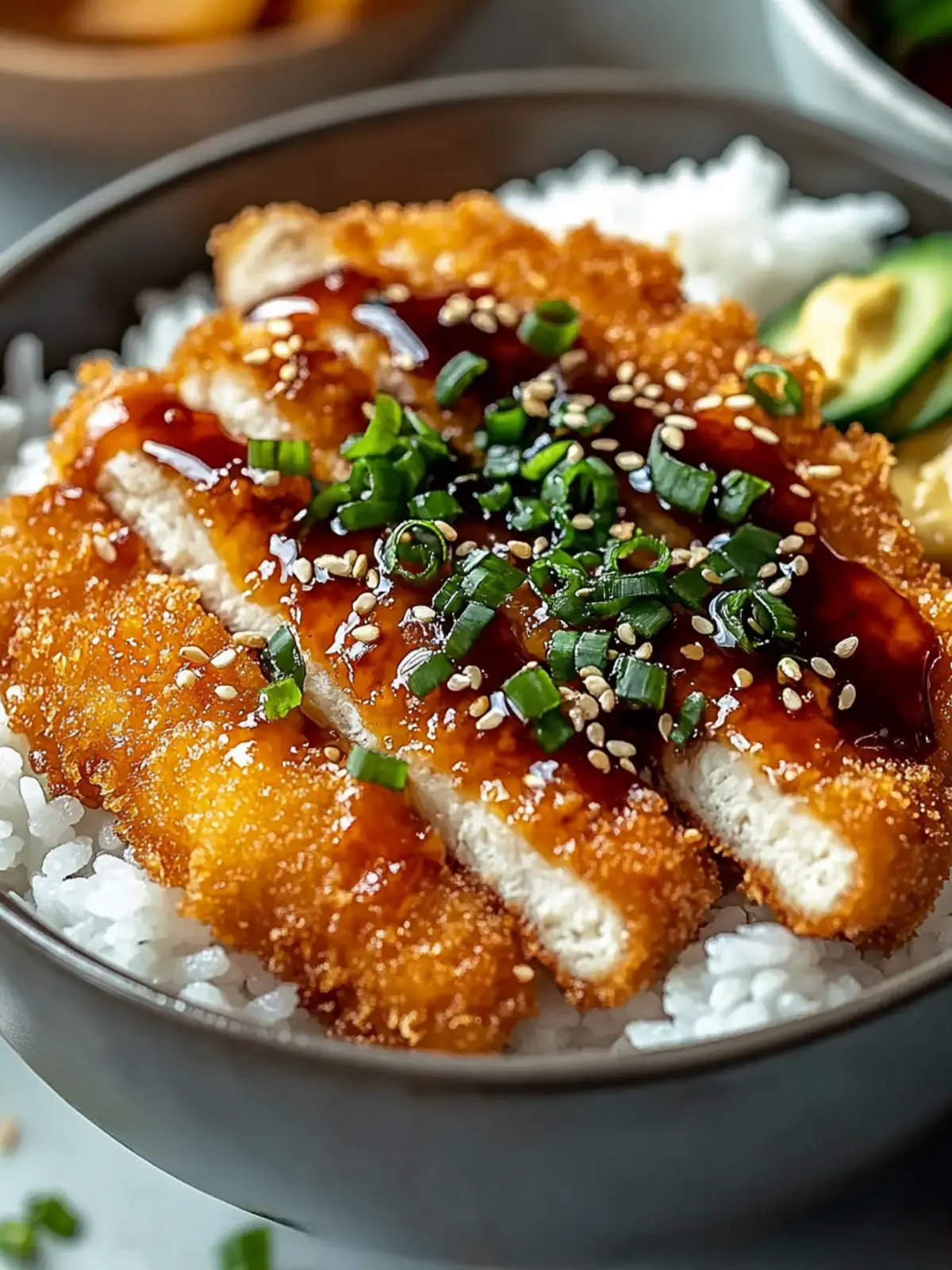
Prepare the Bowls: In serving bowls, add a generous portion of fluffy cooked white rice. Slice the crispy katsu and arrange the pieces on top of the rice, creating an inviting presentation.
-
Sauce It Up: Drizzle the katsu with the tangy tonkatsu sauce, and for an extra touch of creaminess, add a swirl of Japanese mayo on top. Garnish with chopped parsley or green onions to brighten the dish.
Optional: For a pop of freshness, consider adding a side of steamed broccoli or a simple cucumber salad.
Exact quantities are listed in the recipe card below.
Make Ahead Options
These Japanese Katsu Bowls with Tonkatsu Sauce are perfect for meal prep enthusiasts! You can prepare the chicken katsu up to 24 hours in advance. Simply coat the chicken in flour, egg, and panko breadcrumbs, then refrigerate them before frying to maintain freshness. Additionally, cook the rice ahead of time and store it in an airtight container in the fridge for up to 3 days. When you’re ready to enjoy your meal, simply fry the katsu until golden and reheating the rice in the microwave or on the stovetop. You’ll have a delectable dish that tastes just as delicious as when freshly made, saving you precious time during busy weekdays!
Storage Tips for Japanese Katsu Bowls
Fridge: Store leftover katsu in an airtight container for up to 3 days. Make sure the chicken has cooled completely before sealing to prevent moisture buildup.
Freezer: For longer storage, freeze katsu pieces in a single layer on a baking sheet until solid, then transfer to a freezer bag. They can be kept for up to 3 months.
Reheating: To reheat, thaw in the fridge overnight and re-crisp the katsu in a hot skillet with a touch of oil for about 3-4 minutes. The rice can be reheated separately in the microwave or on the stovetop with a splash of water.
Serving Temperature: Always serve your Japanese Katsu Bowls warm for the best flavor and texture. Reheat the rice and sauce separately to preserve their quality.
Expert Tips for Japanese Katsu Bowls
-
Pounding Perfection: Make sure to pound the chicken evenly to promote consistent cooking and that tender bite everyone loves.
-
Dredging Technique: Avoid getting the flour bowl wet. Dust the chicken lightly with flour to ensure the panko sticks well, preventing sogginess.
-
Oil Temperature: Keep an eye on the frying oil; let it heat up adequately before adding the chicken to achieve a crispy crust without excess oil absorption.
-
Batch Frying: Fry in batches if necessary; overcrowding the pan can drop the temperature, leading to uneven cooking and less crispy katsu.
-
Serving Fresh: For the best crispy katsu experience, serve the katsu immediately after frying; it loses its crunch as it cools.
-
Customize Wisely: Feel free to experiment with proteins and vegetarian options in your Japanese Katsu Bowls Tonkatsu Sauce Recipe, ensuring a dish that caters to everyone’s tastes.
What to Serve with Japanese Katsu Bowls with Tonkatsu Sauce?
Enhance your meal experience with delightful sides that complement the comforting flavors of your katsu bowls.
-
Crispy Cucumber Salad: Refreshing and crunchy, this salad balances the richness of the katsu, providing a perfect textural contrast.
-
Steamed Broccoli: Lightly steamed for a touch of color and nutrition, broccoli offers a healthy and vibrant addition to your plate.
-
Miso Soup: A warm, savory broth that adds depth and umami, enhancing the overall Japanese dining experience.
-
Brown Rice: For a heartier and more nutritious base, opt for brown rice. Its nuttiness pairs beautifully with the tonkatsu sauce.
-
Japanese Pickles (Tsukemono): A zesty complement that adds a punch of flavor and a bright crunch to your meal.
-
Green Tea: Refreshing and subtly bitter, a cup of green tea will cleanse your palate and harmonize perfectly with your meal.
-
Sesame Spinach: Lightly sautéed and seasoned, this dish provides a nutrient-rich side that balances the richness of the katsu.
-
Fruit Sorbet: As a light dessert option, the fruity sweetness of sorbet helps cleanse the palate after a savory Japanese feast.
Japanese Katsu Bowls Variations
Customize your Japanese Katsu Bowl for a delightful twist that will surprise your taste buds!
-
Pork Option: Swap chicken for pork chops for a classic katsu experience. This variation is especially hearty and satisfying.
-
Tofu Delight: Use firm tofu or tempeh for a delicious vegetarian twist. Simply slice, season, and coat as you would with chicken for a crispy, plant-based option.
-
Veggie Mix: Add a colorful medley of vegetables, such as zucchini or bell peppers, alongside tofu. They’ll add a burst of freshness and crunch to every bite.
-
Spicy Kick: Incorporate a dash of chili flakes or sriracha into the tonkatsu sauce. This simple addition brings a delightful heat that packs a punch.
-
Coconut Rice: Serve over coconut-infused rice instead of plain white rice for a tropical twist. The sweet and savory duo creates a unique flavor profile.
-
Miso Mayo: Replace Japanese mayo with a miso-based dressing for an umami-packed drizzle. It will elevate the flavor and add an unexpected richness.
-
Quinoa Base: For a nutritious twist, swap out rice for cooked quinoa. It’s a protein-packed alternative that pairs beautifully with the katsu.
-
Sesame Topping: Sprinkle toasted sesame seeds on top for added crunch and a nutty flavor. This simple enhancement makes the dish even more enticing.
Japanese Katsu Bowls with Tonkatsu Sauce Recipe FAQs
What type of chicken is best for katsu?
I recommend using boneless skinless chicken breasts for a juicy and tender result. You can also opt for pork chops if you prefer a traditional twist! If you’re going for a vegetarian option, firm tofu or even eggplant works wonderfully.
How should I store leftovers?
Store any leftover katsu in an airtight container in the fridge for up to 3 days. Make sure the chicken has cooled completely before sealing to prevent moisture buildup, which can lead to sogginess.
Can I freeze katsu? If yes, how?
Absolutely! To freeze your katsu, first, allow it to cool completely. Then, place the pieces in a single layer on a baking sheet and freeze until solid. Once frozen, transfer the katsu to a freezer bag. It can be stored for up to 3 months. When ready to eat, thaw overnight in the fridge and re-crisp in a hot skillet.
What if my katsu isn’t crispy?
If your katsu turns out soggy, it could be due to overcrowding in the frying pan or not using enough oil. Always ensure the oil is adequately heated before adding the chicken to achieve that perfect crispy crust. If there’s excess moisture from the chicken, blot it with paper towels before frying.
Is tonkatsu sauce gluten-free?
Typically, tonkatsu sauce contains soy sauce, which has gluten. However, you can easily make a gluten-free version by using gluten-free soy sauce and ensuring all the other ingredients are gluten-free. Just look for gluten-free panko breadcrumbs as well!
What is the best way to serve katsu?
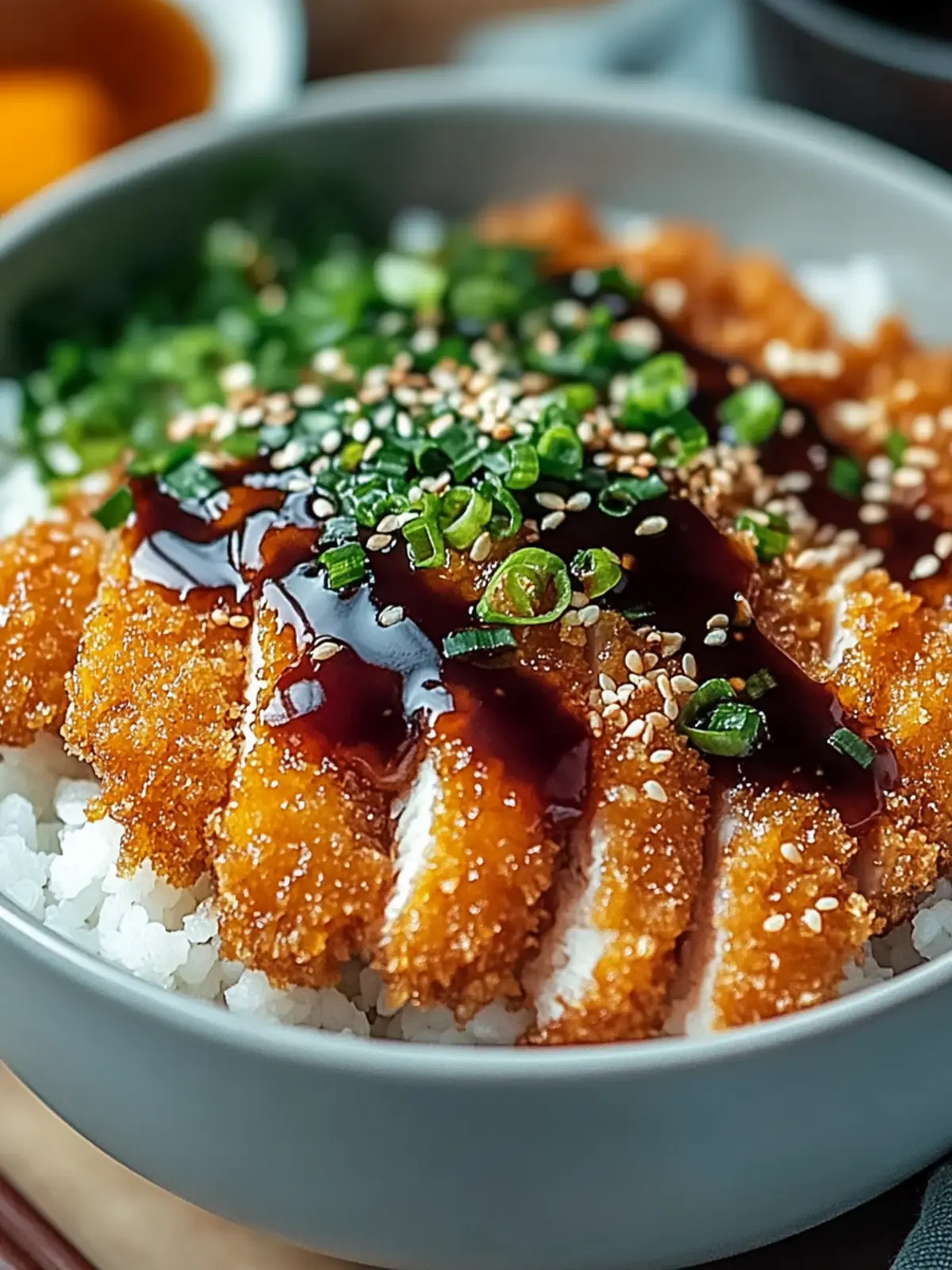
Serve your Japanese Katsu Bowls warm, layering the crispy katsu atop a bed of fluffy rice and drizzling with tonkatsu sauce. For extra flavor, feel free to add a swirl of Japanese mayo and a sprinkle of chopped parsley or green onions for that added freshness. Enjoy!
Remember, these simple tips can make your Japanese Katsu Bowls Tonkatsu Sauce Recipe even better—happy cooking!
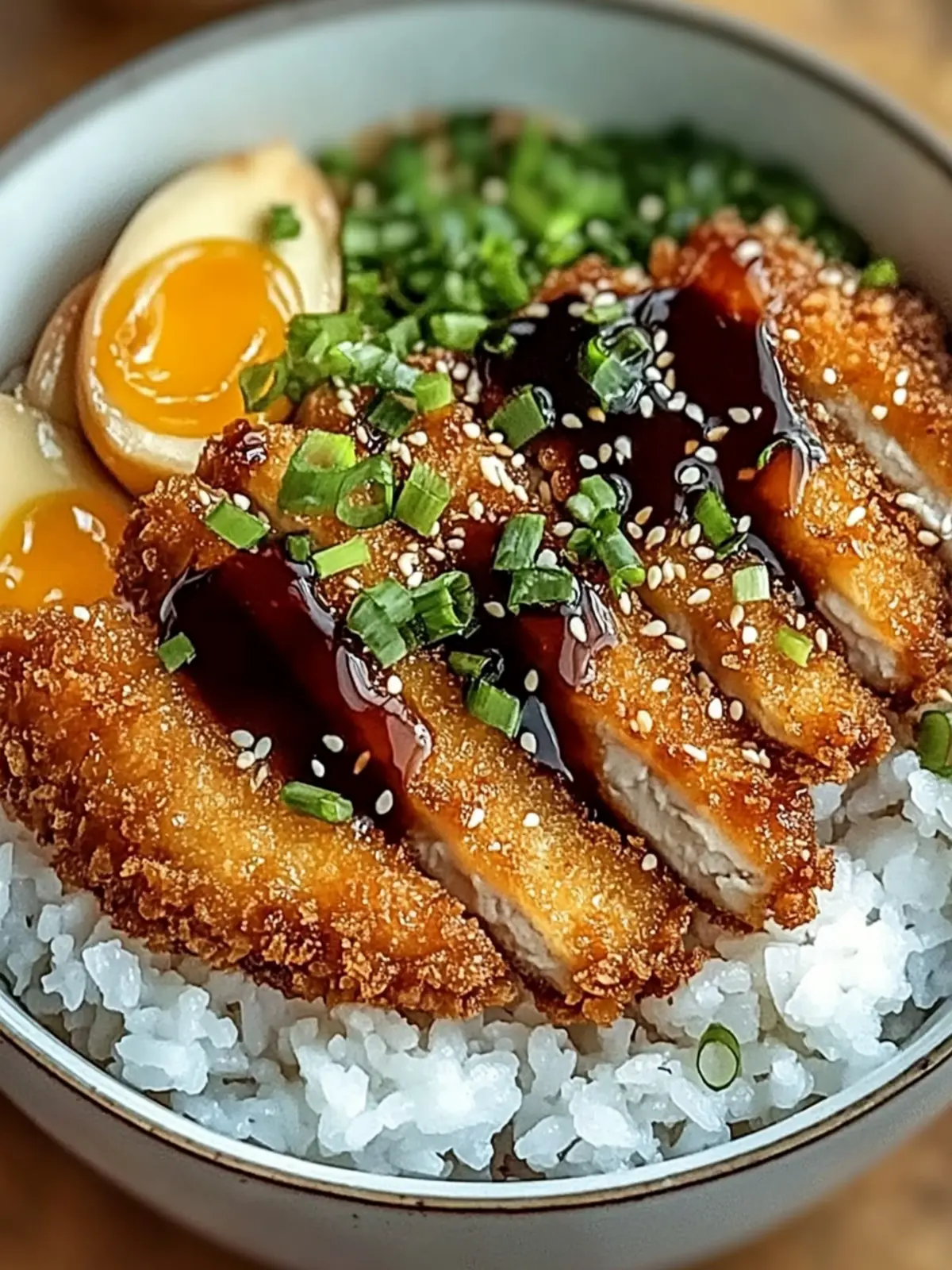
Crispy Japanese Katsu Bowls with Tonkatsu Sauce Recipe Delight
Ingredients
Equipment
Method
- Pound the Chicken: Place chicken between plastic wrap and pound to ½ inch thick. Season with salt, pepper, and garlic powder.
- Set Up Dredging Station: Prepare three bowls for flour, beaten eggs, and panko breadcrumbs.
- Coat the Chicken: Dredge chicken in flour, dip in eggs, then coat with breadcrumbs.
- Fry the Katsu: Heat oil in skillet over medium heat. Fry chicken for 3-4 minutes on each side until golden brown. Drain on wire rack.
- Prepare the Bowls: Add rice to bowls, slice katsu and place on rice.
- Sauce It Up: Drizzle with tonkatsu sauce and optional mayo. Garnish with parsley or green onions.